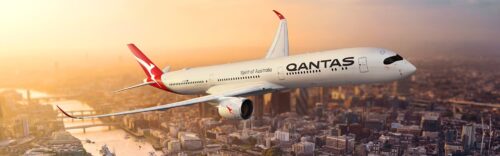
 Figure 1 – Project Sunrise is Qantas’ ambitious plan to fly non-stop from Sydney to London
In July of 2026, Melbourne plane enthusiasts were greeted with a truly rare sight as an unmarked Airbus A350-1000ULR aircraft touched down after flying non-stop all the way from Toulouse, France. Two days later, it would fly back to Europe, with a flight time of 24 hours and 24 minutes. This is not a publicity stunt, but rather a crucial test flight as part of Qantas’ Project Sunrise: a plan that has been in the works since 2017 to carry passengers from Australia’s east coast to Europe non-stop. Whilst historically, such a journey required numerous ‘hops’ as the planes stopped for refueling, earning it the nickname “Kangaroo Route”, the number of hops required has slowly been decreasing over the decades as technology improves. With Project Sunrise, Qantas’ bold new plan hopes to eliminate them completely. However, whether such an ambitious project will be successful is something that the aviation world can only wait and see to find out.
Flying nonstop from Sydney to London has never been a question of whether a plane could physically do it. Modern aircraft undoubtedly have the range to fly the distance. Instead, it has always been a question of whether anyone could make money doing it. To go about answering this question, we must start, firstly, with what Qantas removed. Whilst a regular Airbus A350-1000 aircraft would normally fit around 400 passengers, Qantas cut 162 of those seats to make room for an additional 20,000-litre rear centre fuel tank, a wellness zone, and a cabin where 41% of seats are premium. This was because the plane simply cannot carry a full passenger load and that much extra fuel without exceeding its maximum takeoff weight, a measurement that determines if the plane can get into the air in the first place.
Specifically, that extra fuel tank was directly commissioned by and for Qantas. Airbus says it will extend the aircraft’s range by 1,000 nautical miles, with enough reserve fuel left for diversions as well. As a result, the final product becomes a jet that functions less like a general-purpose airliner and more like a specialised tool built for a handful of extreme-length routes.
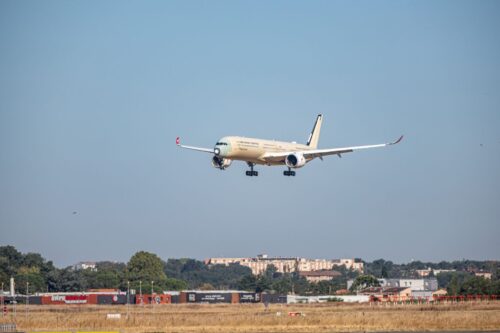 Figure 2 – Airbus’ A350-1000ULR test flight lands in France after more than 24 hours in the air
In terms of the costs of such a project, the numbers quickly become very steep. Fewer seats means that the expense of every flight is spread across fewer paying passengers, which drives Qantas’ cost per available seat mile sharply upward. Ultra-long-haul flying also adds heavier crew and aircraft utilisation costs compared to conventional routes. Meanwhile, Fuel is undoubtedly the biggest exposure, with Qantas absorbing an AU$610 million fuel cost increase in FY26 even after hedging, and at late September 2026 prices, the fuel burned on a single maximum length Project Sunrise flight is worth close to half of its expected passenger revenue.
Therefore, with a heavily thinned passenger seat count, the revenue has to be much more concentrated. With this in mind, Qantas is betting on time-sensitive travellers, mostly corporate, who are willing to pay to skip a stopover. The airline expects to charge around 20% more than passengers currently pay for one-stop alternatives on the same routes. If that premium holds across both premium and economy cabins at healthy load factors, the project can prove to be profitable. However, if it slips, the maths gets uncomfortable quickly.
Historically, there has been a precedent set for ultra-long-haul flights such as Qantas’ Project Sunrise. Singapore Airlines first flew Singapore to Newark (New York) nonstop on the four-engine Airbus A340-500 in 2004, but suspended the route in 2013 when rising fuel prices made the aircraft uneconomic. However, it returned in 2018 with the twin-engine Airbus A350-900ULR and a radical cabin: 161 seats, all business and premium economy, with no economy class at all. Ever since, the route has produced solid evidence that when the aircraft is efficient and the cabin is built around premium demand, ultra-long-haul routes can indeed be profitable.
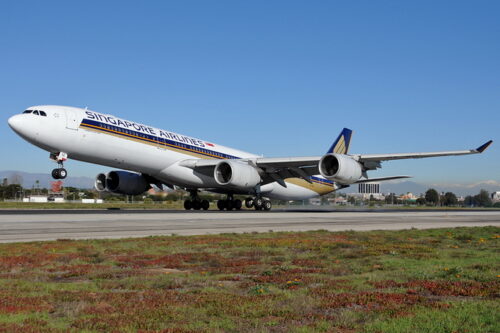 Figure 3 – Singapore’s original SIN-EWR route on the A340-500 from 2004-2013
In the case of Project Sunrise, Qantas has taken that lesson but hedged it. Unlike Singapore Airlines, it kept 140 economy seats, betting it could capture volume and yield on the same flight. Despite uncertainty surrounding Project Sunrise’s eventual profitability, Qantas has already placed orders for 12 A350-1000ULR aircraft with Airbus due for delivery in April 2027, with Sydney to London flights expected to take off in the second half of the year.
Currently, Australian tourists ready to set off to Europe can choose between two options. Sitting on the western coast of Australia, Perth is significantly closer to Europe than other major Australian cities, making it a natural gateway for ultra-long-haul flights. Such direct flights from Australia to Europe are exclusive to Perth, with Qantas’ Perth to London, Paris, and Rome flights being wildly popular as seasonal Australian tourists embark for the European summer. 50% of travelers on these routes originated from major eastern cities such as Melbourne and Sydney. However, following the airspace closure in the Middle East earlier this year, Qantas has been forced to shut down both the Perth to London and Perth to Paris routes due to weight and capacity constraints for long-haul flights.
Alternatively, travellers could also choose to take a stop at one of the mega hub airports in Asia and the Middle East. Singapore, Hong Kong, and Dubai are all popular options for transit stops for Australian travellers. However, these transit stops can easily take up valuable time, including time needed to disembark, pass through security and customs checks, and board once again. These disruptions are especially costly for business travelers whose priority is speed and seamlessness.
Thus, Qantas’ launch of Project Sunrise adequately captures the market demand for this type of travel, with the aforementioned 41% premium cabin comprising 6 first-class, 52 business and 40 premium economy seats. Qantas has also completely redesigned its interior around providing a high-calibre experience for its passengers, including a wellness zone for stretching and light yoga to offset the strain of the 22-hour flight. In comparison, premium classes on Qantas’ 787-9 and A380 flights only make up 30% of seats.
 Figure 4 – Rendering of the new first class cabins for Qantas’ Airbus A350-1000ULRs
In terms of industry competitiveness, Project Sunrise’s main aim is to capture the customer base that values timeliness and is willing to pay a premium for it. Singapore Airlines operates more flights to Australia than to any other country outside of Australia, and it is currently the top choice for travelers to Europe and the United States, with Singapore’s Changi Airport offering the most reliable one-stop transit.
With the introduction of Project Sunrise, Qantas would be competing directly with Singapore Airlines and other airlines that offer one-stop itineraries through Asian hubs. Here, Qantas has the competitive advantage of reaching London at least 4 hours faster than current services, and travellers do not have to worry about the hassle of transit. It also minimizes jet lag as passengers do not have to journey across different time zones, especially with Project Sunrise’s specially tailored cabin lighting schedules and mealtimes. As such, Qantas would also be able to charge premium prices for time-sensitive customers, ideal for business passengers.
However, Qantas is now only offering a direct Sydney to London route as part of the project, whilst Singapore Airlines sells connectivity from Australia to the rest of the world. Meanwhile, they are also investing SGD$1.1 billion in refurbishing their first and business class suites on their Airbus A350 aircraft to be introduced in 2027 ahead of Project Sunrise’s launch. Further, it is likely that in response to Project Sunrise, these airports will also be incentivised to invest in major renovations and upgrades to their lounge offerings, to further enhance their luxury status. From this, business travellers will be faced with a harder decision, as booking the Qantas flights seems increasingly like a sacrifice of comfort rather than a convenience.
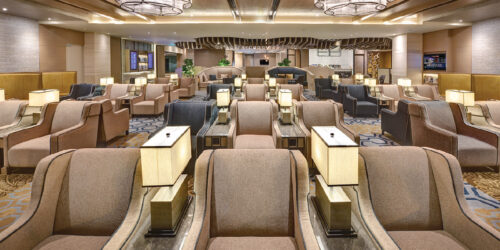 Figure 5 – The Plaza Premium Lounge at Singapore’s Changi International Airport
Following Sydney to London, the Sydney to New York flight is also the second route confirmed as the demand for travel between Australia and the United States steadily increases. If Project Sunrise proves to be successful, Qantas may also potentially introduce more services from more Australian cities such as Melbourne to more destinations around the world. With such global connectivity, Sydney would likely become a major hub airport for travelers in the Pacific region, such as from New Zealand, to transit through Australia to Europe and the US. From this increased and more efficient flow of passengers to and from Australia and Europe and North America, it is very likely that this will bring about heightened economic activity, which can also create positive spillover effects for the entire Australian economy.
Overall, the competitive effects that Project Sunrise introduces are expected to be significant and will almost certainly bring about big movements in the airline industry. Already hailed by many as one of the most ambitious projects ever undertaken, Qantas certainly hopes that it will kickstart a new era of prosperity for the airline and connectivity for Australians. As they enter the final stages of planning and development, ready for launch in the second half of 2027, the aviation world can only wait and see to find out if Qantas’ massive investment proves to be either brilliant or reckless. On the one hand, these ultra-haul non-stop flights could upend the current one-stop model and redefine travel from Australia to Europe, whilst on the other hand, they could be pushed into irrelevance as other carriers and hub airports retaliate with their own investments. Only time will tell, as the launch date inches ever closer.
The CAINZ Digest is published by CAINZ, a student society affiliated with the Faculty of Business at the University of Melbourne. Opinions published are not necessarily those of the publishers, printers or editors. CAINZ and the University of Melbourne do not accept any responsibility for the accuracy of information contained in the publication.