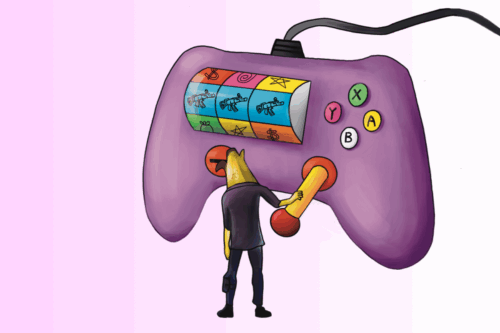
Gaming revenue is higher than ever, with both levels of big and small spending normalised.
Ask any of your friends what PC games they are currently playing. Odds are, they’re playing one of the 130,000 new Steam titles that have come out since 2013; over 97% of all games ever released. Or as some would say; “we’ve got 97% of Steam’s entire gaming catalogue before GTA VI”. Jokes aside, this statistic points to gaming’s massive scale, reaching 3.49 billion active gamers worldwide, and how normalised gaming has become, whether casual or competitive. Yet with revenues projected to grow to around $320 billion by 2030, most may not realise the subtle nuances as to why the business of gaming is booming, and how the very business models that underpin their successes have slowly evolved from the bulky arcades in the 1970s to our mobile phones over half a century later. From the single, upfront price tag to the “free” download that quietly out-earns it, this article details how these two models work, where they overlap, and what happens when publishers push either one too hard.
A market that size has to be paid for somehow, and the oldest arrangement is also the plainest: a single price, settled up front, before the player has seen a minute of the game. It appears the simpler of the two, yet the complete paid game has quietly become the more sophisticated pricing exercise in the industry, one that looks like a single number and behaves like a menu. Consider what Rockstar is doing in November. Grand Theft Auto VI arrives in two forms; a standard edition at $79.99 USD, alongside an Ultimate Edition at $99.99 — one game, two prices, and buyers left to choose how badly they want it.
The headline price itself is the rigid part of the equation. Having moved from $60 to $70 around the 2020 console launch, led by Take-Two’s own NBA 2K, the industry has scarcely shifted since. Microsoft announced $80 pricing in 2025 before abandoning it and has never charged above $70 for a standard edition, whilst Sony continues to hold at $70. Most analysts now treat $80 as a ceiling reserved for a handful of luxury franchises rather than a new baseline. Publishers therefore discriminate around the number rather than through it, holding a $70 base and stacking editions above it at $80 to $100, bundled with early access, cosmetics and a season pass. The eager pay more; everyone else pays base or waits.
Furthermore, geography does more work than most people assume. Steam sets prices based on local purchasing power, landing 50 to 70 per cent below US levels across South-East Asia and Brazil and 40 to 60 per cent across the CIS, and refreshes them as local economies shift.
Time completes the picture, and Rockstar’s own back catalogue shows how far that lever stretches. Grand Theft Auto (GTA) III, Vice City and San Andreas sold at full retail between 2001 and 2004, before returning as inexpensive mobile ports, then a 2021 remaster, then $19.99 standalone mobile releases, and finally free to Netflix and GTA+ subscribers — becoming Netflix’s most successful games launch to that point. One catalogue, six prices, more than two decades, and not a single buyer ever obliged to declare what they would have paid.
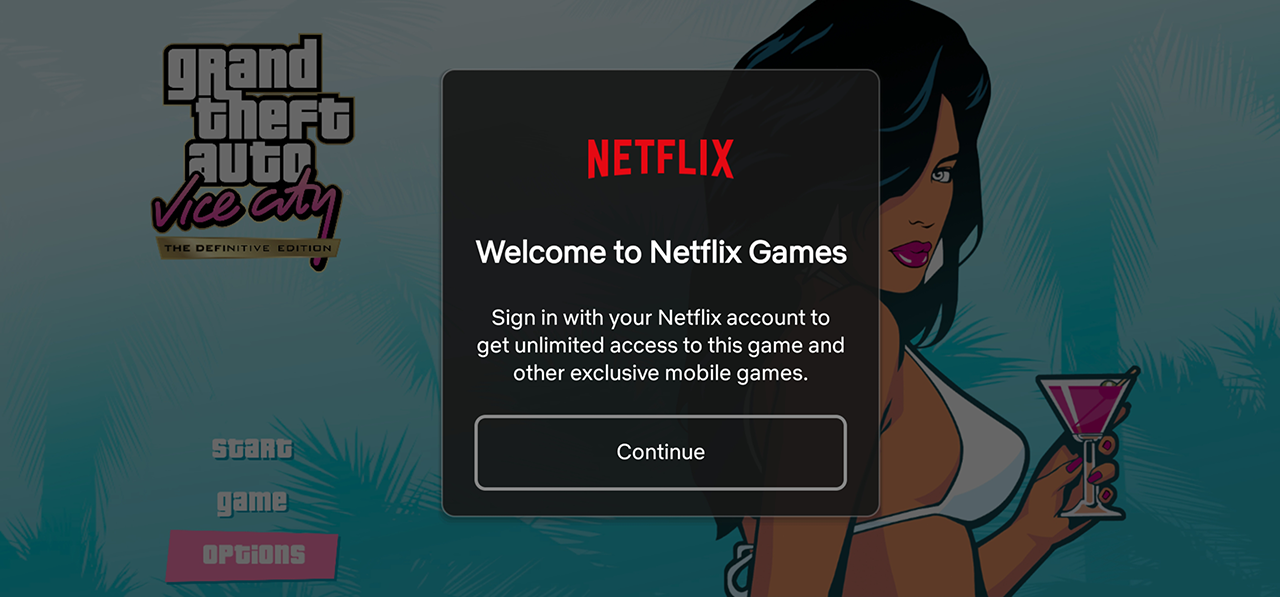
Figure 1 – The end of the line: Vice City, once a console release, now behind a Netflix login.
Minecraft marks the boundary of the model, at roughly $30 on PC and $7 on mobile, more than 300 million copies sold, and a marketplace of paid add-ons resting atop the initial purchase. The complete paid game, it turns out, is rarely complete and rarely paid for only once.
What may seem unintuitive in the gaming industry is the success of the “free-to-play” business model, whereby prospective players can download a game and start playing; completely for free. Naturally the question of how these games turn a profit involves a combination of psychological and commercial strategies that have evolved just as much as the very technology that is used to run these games.
The first iteration of these games appeared in Asian PC games markets in the early 2000’s with titles such as QuizQuiz and Maple Story, pioneering the business model of offering microtransactions that allowed the optionality to purchase cosmetic in game items that only marginally added to the player experience, without any standalone requirements. Almost a decade later, games like FarmVille brought that strategy to mobile phones, capitalising on Facebook’s reach for access to much larger audiences. In one sense, mobile gaming very much fit the model of free-to-play games where the idea was to habitualize microtransactions through offering games as a continuous service that maintains audience engagement over long periods of time, as opposed to a finite finished product. Even more so, offering games without any initial price tag essentially removed all barriers to entry that could deter potential players.

Figure 2: Farmville being accessed through facebook, enabling larger audience reach
Now, over two decades later the mobile gaming industry is forecasted at $213.9 billion in 2026 and it is projected to continue growing. Even with this shift where free-to-play games can maintain greater engagement, free to play games typically only have around 2-5% of its playerbase as paying customers. Within that group, so-called ‘whales’, players who spend exponentially more than most, contribute close to 90% of total revenue. Constant updates to these games meant that players can now purchase bundles of in-game items whenever they desire. This set a standard where developers catered to smaller spenders through offering seasonal subscription models of bundled cosmetics and in-game items, seen famously with the “battle pass” from Fortnite that became an industry standard due to facilitating predictable and recurring revenue streams. In the case of Fortnite, these passes contribute almost 22% of their projected $6 billion in revenue in 2026 alone.
The aptly named ‘gacha’ systems — derived from Japanese ‘gachapon’ toy vending machines, are a further evolution, letting players spend in-game currency to gamble on randomised loot boxes for scarce cosmetics with little to no competitive advantage. Appealing to people’s inner-gambler is what mainly drove Genshin Impact’s US$710 million in revenue in 2024 alone, and it continues to be a revenue driver for other large free-to-play titles such as Honkai: Star Rail and Wuthering Waves.
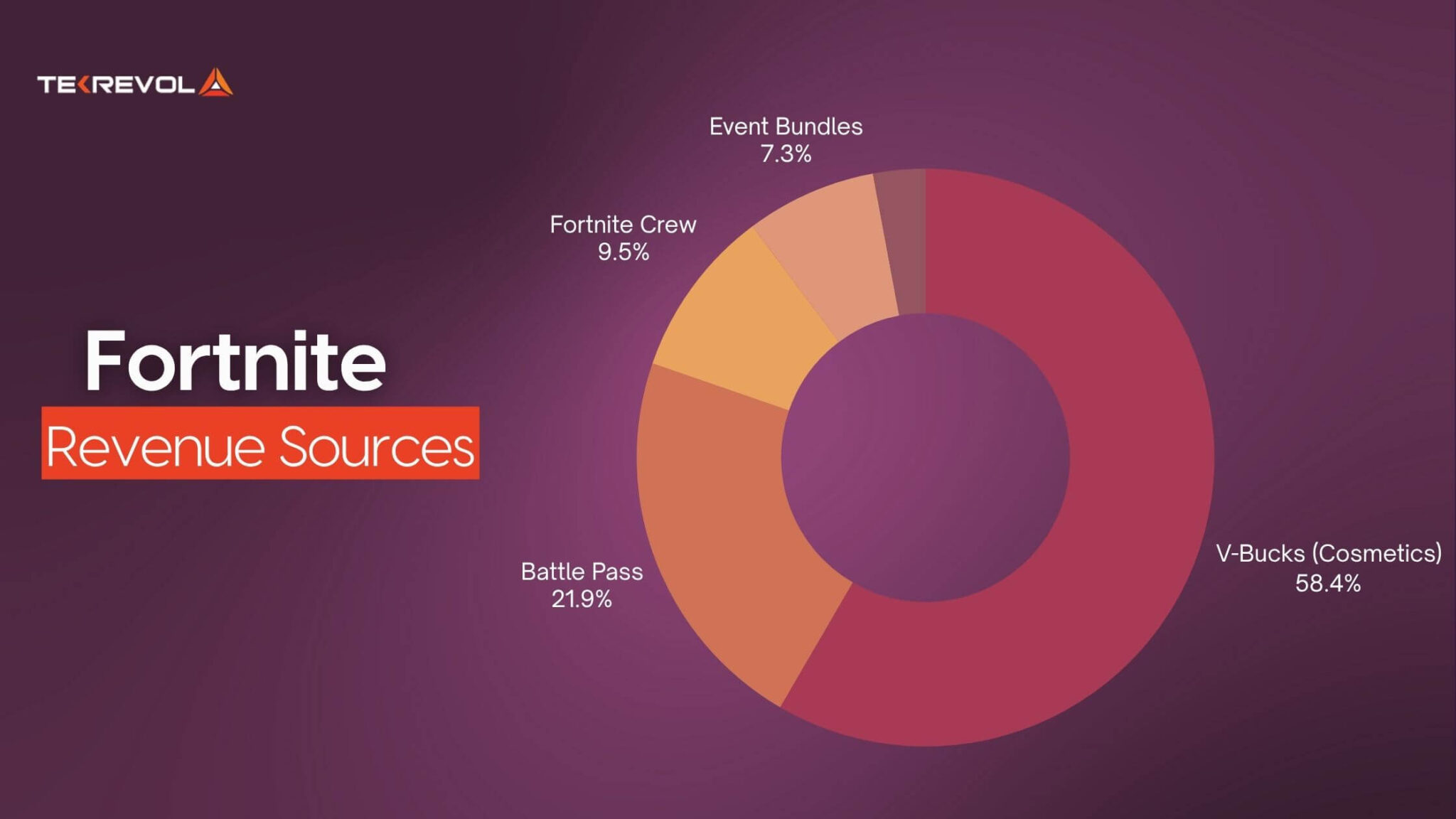
Figure 3: A breakdown of Fortnite’s revenue drivers
What is obvious is the free-to-play model clearly gives games far greater audience access than paid titles, to where “Freemium” games that now have 85% of global gaming revenue market share. Even though a large majority of players will never spend, the already massive concentration of spending that is fueled by the low barriers to subscriptions and gambling, among other features, sees no slowing down especially as this model continues to engage with audiences.
While the two models described may appear different, they possess the same underlying strategy, that is price discrimination. Modern video games are naturally designed in a way that makes it easy to charge individuals different amounts for what is basically the same game. There is no marginal cost per copy, and players sort themselves into price tiers without being asked.
Editions and whales work in the same way. They’re just visible in one model and invisible in the other. A game edition sorts players openly based on which version they buy; free to play sorts players quietly based on how much they spend over time. The real change in monetization isn’t a shift from paid games to free ones, it’s a shift towards charging every player a different price.
But this balance is fragile. Push the paid side too far and players will realise it is no longer optional, but necessary to spend, and this is when the model breaks. Clash Royale shows what happens when monetization crowds out the game it’s attached to. Recent updates such as the increase in maximum card levels, the introduction to ‘hero’ and ‘evolution’ cards, and the removal of rewards from casual game modes, have completely misjudged how far regular players would tolerate monetization stacked on top of progression. Monthly users have dropped to below 10 million, and the game has failed to recover since. Supercell has acknowledged the issue and have promised no more progression based alterations to the game.
Figure 4: The addition of evolution (bottom) and heroes (top) completely ruined player experience for many clash royale users.
This begs the question: what direction is the gaming monetization model heading? Newzoo, a games analytics firm, has flagged 2024 as the point where live-service models reached a peak. Many analysts, such as Tom Wijman believe that this model has hit market saturation despite games such as Fortnite and EAFC keep selling. Newzoo’s industry survey backs this up: with 19 live-service games taking over 60% of the total play time. 45% of industry respondents expect studios to pull back towards premium buy to release models, which contain optional in-game purchases. Furthermore, Sony’s pipeline shows this in practice. In 2022, Sony promised 12 live-service games by 2025, where as of now, only one game has launched successfully, seven games have been cancelled, and the rest remain in limbo.

Figure 5: The highly anticipated EAFC27, which includes a base fee as well as optional in game purchases that don’t override free to play experience, is a perfect example of where the gaming world is headed.
The free to play and prepaid game model look like opposites, but they simply solve the same problem from different directions. Free to play starts at zero and lets spending grow over time, whilst prepaid games start at a fixed price and multiply it through editions and reputation. The industry’s real evolution is charging each player exactly what they’re willing to pay, but eventually that has a ceiling. Push it until players notice, and the model breaks.
https://www.apricitas.io/p/video-games-price-architecture-and
https://www.brsoftech.com/blog/minecraft-revenue-model-how-it-makes-money/
https://www.businessofapps.com/data/genshin-impact-statistics/
https://daydreamsoft.com/blog/free-to-play-vs-premium-which-monetization-model-truly-works-in-modern-game-development
https://deltahumans.com/blog/the-rise-fall-and-resurgence-of-the-arcade-game-industry-xp7nb
https://gamedevreports.substack.com/p/newzoo-forecasts-and-gaming-trends?open=false
https://www.gamedeveloper.com/business/are-video-games-underpriced-
https://www.gamespot.com/articles/80-games-are-already-here/
https://www.gamespot.com/articles/gta-3-vice-city-and-san-andreas-now-available-free-through-netflix/1100-6519956/
https://www.gamespot.com/articles/what-goes-into-a-game-price-tag/ https://glotier.com/games/clash-royale
https://www.ign.com/articles/has-80-gta-6-opened-the-door-to-more-expensive-games-analysts-respond
https://www.immutable.com/guides/how-much-does-steam-take
https://instreamly.com/posts/gaming-industry-trends-where-the-market-is-heading-in-2026/
https://medium.com/@JeongHyeonUk/the-rise-of-retention-revenue-models-in-games-80d30ae88831
https://newzoo.com/articles/2026-global-games-market-key-numbers
https://www.spencerlocke.net/what-is-a-whale-in-gaming/ https://steamdb.info/stats/releases/
https://www.take2games.com/ir/news/rockstar-games-announces-pre-orders-grand-theft-auto-vi
https://tech.yahoo.com/general/articles/domination-live-games-coming-end-135930958.html
https://www.visualcapitalist.com/sp/video-games-industry-revenue-growth-visual-capitalist/
The CAINZ Digest is published by CAINZ, a student society affiliated with the Faculty of Business at the University of Melbourne. Opinions published are not necessarily those of the publishers, printers or editors. CAINZ and the University of Melbourne do not accept any responsibility for the accuracy of information contained in the publication.