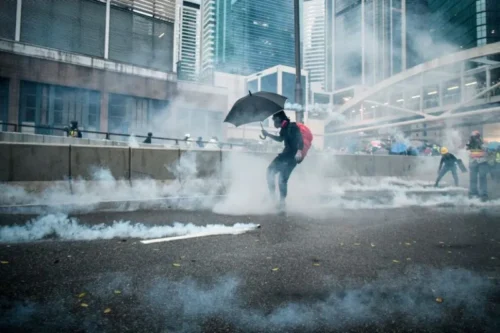
 Figure 1 – Throughout 2019, Hong Kong witnessed widespread protests on a historic scale
It started with a single murder case in Taiwan in 2018. In response to the murder suspect fleeing back to Hong Kong to avoid Taiwanese prosecution, the Hong Kong government in February 2019 proposed a bill that allowed the extradition of such suspects to other jurisdictions without any formal treaties. Significantly, it included the possibility of extradition to Mainland China. Whilst at the time, Hong Kong’s Chief Executive Carrie Lam framed the bill as a simple legal fix to assist the judicial systems of its neighbours, few believed that this was the entire story. As a result, fierce opposition within the city grew, which eventually erupted in what we remember as the Hong Kong protests of 2019-2020.
Since 2017, Carrie Lam has long been viewed by critics as Beijing’s proxy. Opponents of the bill pointed to mainland China’s 99.9% conviction rate and argued it would ruin the one country, two systems framework that has defined Hong Kong since the 1997 handover, allowing the city to maintain independent courts, a free press, and open internet access. What’s more is that such views weren’t out of paranoia at all, with a People’s Liberation Army garrison stationed in the heart of the city serving as a symbolic reminder of where the final authority sat on the island. With Lam refusing to withdraw the bill, resistance only grew, and quickly spilled out onto the streets in the form of mass protests.
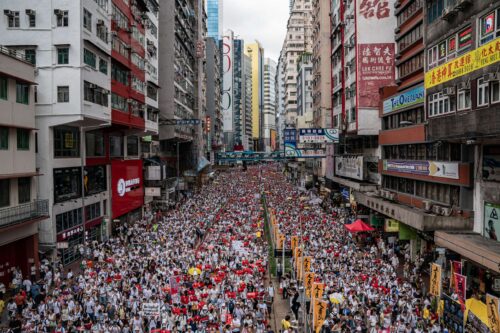 Figure 2 – Demonstrators filled the streets to voice their opposition to the extradition bill
On the 9th of June 2019, over a million people marched. Three days later, protesters surrounded the Legislative Council building. With police firing rubber bullets and tear gas into the crowd, the hard hats, facemasks and umbrellas originally brought along for protection by the protestors quickly became the movement’s defining uniform, which also served as a callback to the 2014 Umbrella Movement. By mid June, the protests had fractured into something more violent and more sustained, with an estimated more than two million people having taken part already. That number accounts for a quarter of Hong Kong’s entire population. On the 21st of June, students besieged the police headquarters and blocked roads in Admiralty, a key commercial, government, and transport hub in the city. Following this, on the anniversary of the Hong Kong handover, protesters managed to storm the Legislative Council building on the 1st of July, smashing furniture and spraying anti-CCP slogans such as “Hong Kong is not China” and “Destroy the Chinese Communist Party”.
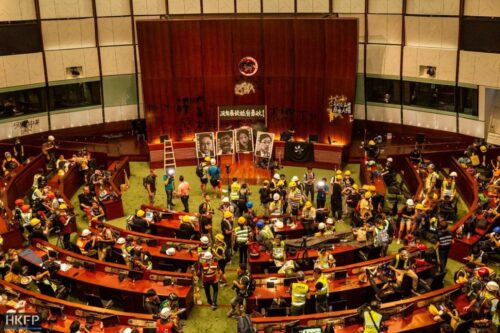 Figure 3 – Protesters inside the chambers of the Legislative Council in Hong Kong
During this turbulent period, highways became conflict grounds. Police responded with batons, rubber bullets, pepper spray, and water cannons. Further, widespread reports of violent beatings during arrests, including of people who had not resisted, had been documented as well. By the time the bill was withdrawn on the 9th of July, more than 10,000 people had been arrested. However, whilst the bill was dead, the movement it created lived on as the goals of the demonstrators shifted to other aspects of alleged Mainland Chinese encroachment on Hong Kong’s freedom rights.
Despite this, as the world entered 2020, the emerging COVID-19 pandemic would quickly smother the scale and attention of the protests as the world’s focus shifted away from Hong Kong and public gatherings became restricted. Stringent precautionary measures at the Chinese border proved to be futile as Hong Kong confirmed its first COVID-19 case on the 22nd of January, 2020. For the Hong Kong government, this timing was almost convenient, enabling them to impose a four-person limit for public gatherings, which severely constrained the mobilisation of protests. As the number of COVID-19 cases surged in Hong Kong, the protest movement quickly diminished.
Against the backdrop of the ongoing pandemic, Beijing directly enacted the National Security Law (NSL) on Hong Kong on the 30th of June 2020. This legislation was extremely consequential, and established the crimes of secession, subversion, terrorism, and collusion with foreign organisations, alongside expanding authorities’ power to surveil, detain and search suspected parties, whilst simultaneously imposing obligations on publishers and internet providers to restrict and remove content that contravenes the law.
As the NSL came into effect on the 1st of July, Hong Konger Tong Ying-kit drove his motorcycle into three riot police officers, carrying a flag with the slogan ‘Liberate Hong Kong. Revolution of our times’, and would be the first arrest made under this law. In the following year, over 100 people would also be arrested, including media tycoon and vocal pro-democratic campaigner Jimmy Lai, for colluding with foreign forces to endanger national security. With his trial only having concluded earlier this year, Lai received a 20-year jail sentence and is one of the most prominent political prisoners in Hong Kong currently.
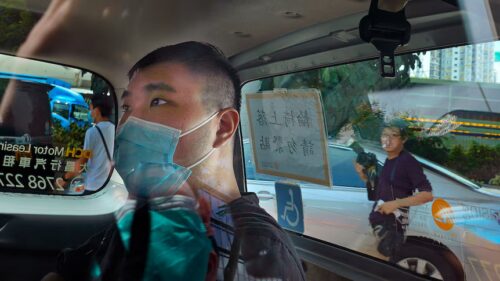 Figure 4 – Tong Ying-kit received a 9-year jail sentence for breaking the NSL
When viewing Hong Kong’s adoption of the NSL with a more international lens, many Western countries, including Australia, Canada, the UK and the US, also expressed concerns regarding the implications this had for existing extradition treaties with Hong Kong. Previously, if someone in Hong Kong was suspected of a crime in Australia, Australian authorities could request their surrender from Hong Kong to face legal proceedings locally, and vice versa. However, the NSL had since raised worries about whether it could provide sufficient judicial safeguards, or if such cases may fall under the jurisdiction of Chinese authorities. As a result, these countries, including Australia, moved quickly to suspend their extradition treaties with Hong Kong.
In addition, Hong Kong’s political landscape is also characterised by its history as a former British colony. After Britain’s colonial rule, the city’s handover to China on 1 July 1997 resulted in Hong Kong remaining under a separate administrative and judicial system through the one country two systems arrangement. Specifically, Hong Kong residents born before the handover could be considered British Nationals (Overseas). Following the implementation of the NSL, the British government launched the HK BN(O) visa scheme, which enabled BN(O) citizens and their families to reside in the UK for up to 5 years. This substantially eased the application and costs for British citizenship, and served as a more frictionless alternative to other immigration pathways at the time. Significantly, under the HK BN(O) scheme, 70% of Hong Kongers were potentially eligible visa applicants. Subsequently, Hong Kong saw an exodus of residents leaving through the BN(O) pathway, where a majority of UK migrants reported leaving due to fear amidst Hong Kong’s tightening political control. This is reflected in official government statistics, where a record population decline of 1.2% was reported in 2021, with a net outflow of regular residents.
In 2022, John Lee succeeded Carrie Lam after running uncontested in the Chief Executive election. Being a vocal advocate for the NSL, Lee was recommended by the State Council of China in his election, and his accession preceded a change to Hong Kong’s electoral laws that only loyal patriots to Beijing could hold office.
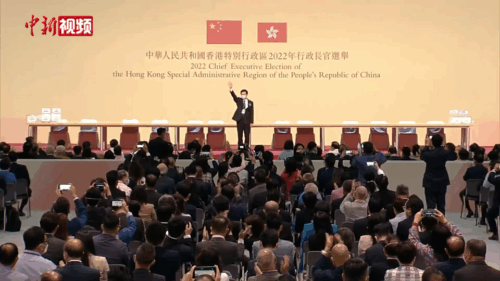 Figure 5 – John Lee is elected unanimously as Hong Kong’s new Chief Executive in 2022
Today, Lee remains in office, and the protests have all but subsided. For such a consequential and large-scale protest movement grounded in justifiable concerns and frustration, it did not seem to achieve anything significant other than grasping global headlines. Whilst the initial extradition bill was eventually blocked, the next major legislation passed seemingly imposes a set of even stricter laws that the demonstrators were largely unable to voice their opposition to, being caught in a global pandemic. As a result, the protest movement met a rather anti-climactic end, and in contradiction to its aims, Hong Kong’s political system today is more tightly controlled by Beijing than in 2019 as the Legislative Council of Hong Kong simply moves on from one Beijing-approved candidate to another.
The CAINZ Digest is published by CAINZ, a student society affiliated with the Faculty of Business at the University of Melbourne. Opinions published are not necessarily those of the publishers, printers or editors. CAINZ and the University of Melbourne do not accept any responsibility for the accuracy of information contained in the publication.