OPEC has survived wars, price crashes, and decades of internal bickering. What it has never had to survive is one of its integral members deciding the whole arrangement simply is not worth it anymore. That changed when the United Arab Emirates walked away.
After 59 years, the UAE left on May 1, not out of rage or a crisis, but out of simple economics.
Suhail al-Mazrouei, the UAE’s minister of energy, did not make a grand announcement or host a press conference. He informed Reuters that the decision came after “a careful look at current and future policies related to level of production.” Stripping away the diplomatic language, the message is straightforward: the UAE believed it was being held back.
Figure 1: Representing OPEC. Source: Economic Times
Since its inception in 1960, the Organisation of Petroleum Exporting Countries, more commonly known as OPEC, has acted to impose strict order over the global crude oil trade. Member countries, including Iraq, Iran, and Kuwait, regularly meet to set production targets and coordinate output. By regulating the supply of crude oil, OPEC effectively controls its market price, a strategy made especially powerful by the structural inelasticity of oil demand. In 2016, OPEC forged further alliances with 10 other oil producing countries and created OPEC+, controlling approximately 40 to 44% of global crude production and holding roughly 79 to 80% of proven global oil reserves.
The organisation emerged as a bid to restore sovereign control over an energy market that had long favoured international oil companies. Through a strategic mix of embargoes, output curtailment, and production restrictions, incumbents like British Petroleum observed increased costs and decreased revenues, steadily losing their market power. The period between 1969 and 1973 saw OPEC assume the lion’s share of control over the production and pricing of oil, ending the hegemony of Western multinationals just a decade after the organisation was established. Coordination among member states made it far easier to nationalise oil production and structure prices in their favour without inviting punishment from Western governments. Although a single nation could be isolated and pressured, a unified bloc is not so easy to dismantle.
OPEC’s interests have expanded from the restoration of sovereignty to long-term demand management and revenue stability for member countries, ensuring that the market will always clear on their terms. Its actions inherently align with the economic and political interests of its members, which can be detrimental to consumer nations. OPEC’s largely unregulated, monopolistic power over a key strategic resource also draws concerns over long-term security of access, as it both controls supply and raises barriers to market entry for external firms.
Every cartel also faces a structural problem: every member has an individual incentive to deviate from the set quota. By producing more, a member can capture more of the elevated price the cartel initially sets, which leads to a gradual breakdown in price back toward marginal costs over time.
The existence of this profitable deviation makes the cartel structure inherently unstable, as is now strikingly evident.
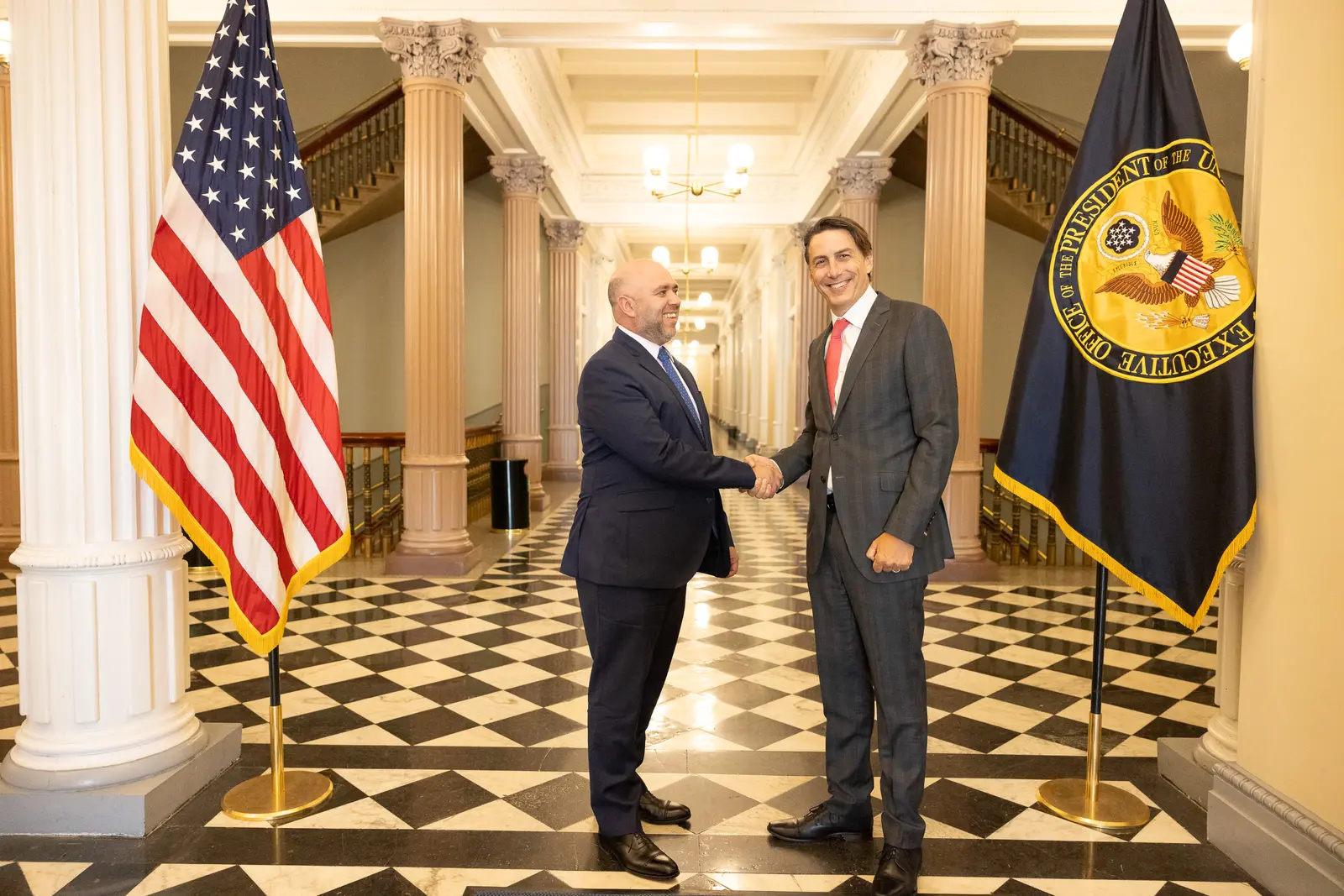
Figure 2: UAE-US Partnership on Clean Energy. Source: UAE US United
The UAE did not walk away from OPEC because the organisation stopped working. If anything, it walked away because it had spent the better part of a decade making sure it would not need it anymore. That is a markedly distinct kind of exit.
Most OPEC members stay because they have to. The cartel’s production limits exist to prevent oil prices from collapsing, and for countries whose entire fiscal systems depend on a stable price floor, that protection is not optional. The UAE looked at that dependence, recognised it as a vulnerability, and spent years quietly engineering its way out of it.
The $150 billion ADNOC expansion was the most visible part of that effort to reduce dependency. It was never purely about pumping more oil, but about accumulating the kind of scale and flexibility that makes external constraints, like OPEC quota limits, progressively harder to justify. A comparable story can be told about the Fujairah terminal, which sits on the Gulf of Oman. Building an export route that bypasses the Strait of Hormuz entirely was not a response to the current conflict. That infrastructure takes years to develop. The UAE was solving a problem it could see coming long before anyone else was talking about it.
The same pattern runs through its foreign policy. The Abraham Accords, the tightening relationship with Washington, the $1.4 trillion US investment framework were not separate decisions that happened to coincide with the OPEC exit. They were all threads of the same strategy, pulled in the same direction over the same period of time.
By May 1, the announcement was almost a formality. The real decision had been made gradually, investment by investment, alliance by alliance, over the course of years. OPEC did not lose the UAE last week. It lost it long before that.
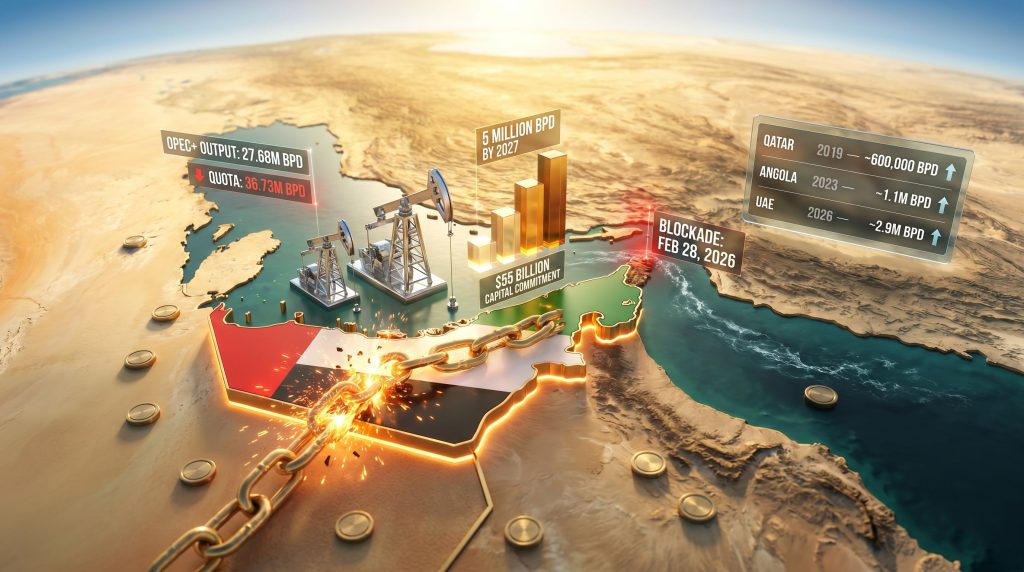
Figure 3: Representing UAE’s withdrawal from OPEC. Source: Discovery Alert
The UAE’s departure from OPEC marks not only a strategic pivot toward closer ties with the United States, but also what energy research experts warn could be the beginning of the end for the alliance.
This concern is well founded, as the UAE accounts for 15% of OPEC’s production capacity and had been one of the organisation’s more compliant members. At the same time, the destabilisation of oil markets from the Iran conflict has handed oil-producing countries a unique opportunity to profit.
The most unexpected beneficiary has been OPEC+ member Russia, which has received a significant windfall from easing US sanctions, lifting its export revenues by an estimated $10 billion a month and expanding its influence across the region.
Although OPEC outwardly presents itself as a unified organisation, its history is defined by internal rivalries and persistent rule-breaking. Iran is a prime example: once a major OPEC producer, its influence has been steadily eroded under US sanctions supported by fellow members that view Tehran as a regional rival. The Iran conflict has further exposed the fragility of these relationships, with Iran having bombed several OPEC members including the UAE prior to its departure from the organisation. This situation has only escalated, with the Gulf state attempting to convince Saudi Arabia and Qatar to launch counterattacks in retaliation.
In practice, OPEC membership has little bearing on how much oil a country actually produces. Most members routinely exceed their quotas and face no penalties for noncompliance. OPEC’s real power may therefore be political rather than economic, allowing member states to leverage OPEC affiliation for domestic legitimacy and the appearance of strong economic control. Notably, in 1998, Venezuela joined OPEC under President Hugo Chávez during a period of rising oil prices, and Chávez openly claimed political credit for his country’s ensuing prosperity.
For now, the UAE’s exit has not yet moved global oil prices, largely due to the continued blockade of the Strait of Hormuz keeping exports constrained. Russia’s Finance Minister Anton Siluanov has predicted that as the UAE increases output outside of OPEC’s framework, global production will rise and future oil prices will fall.
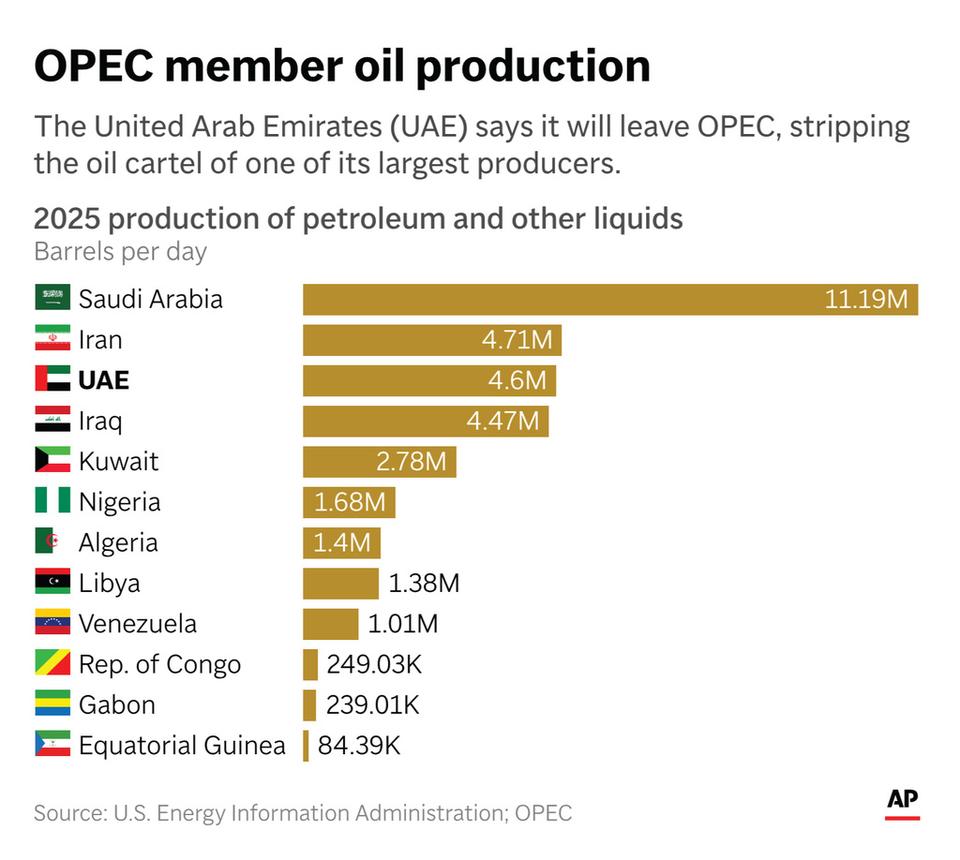
Figure 4: Breakdown on OPEC member oil production
While the UAE’s departure from OPEC may appear sudden, it is the product of years of deliberate planning, as the country developed its own alliances and infrastructure to gain independence from the cartel. Its exit comes at a time when OPEC’s unity is under strain from member noncompliance, internal rivalries, and rising instability across the Middle East. The Iran conflict has only deepened these divisions, revealing a region that is drifting away from unification under any single energy framework.
Whether the UAE’s decision marks the beginning of the end for OPEC or the opening of a new era in energy politics, its departure signals a clear shift in who holds power over oil. As the Gulf region grows less stable and more producers recalculate the value of membership, the systems built around OPEC’s influence will become harder to sustain. The consequences of this shift will reach far beyond the Middle East, reshaping the balance of power in global energy markets for years to come.
https://www.reuters.com/markets/commodities/uae-says-it-quits-opec-opec-statement-2026-04-28/
https://www.eia.gov/finance/markets/crudeoil/supply-opec.php
https://www.frontiersin.org/journals/political-science/articles/10.3389/fpos.2025.1733529/full
https://www.oklahomaminerals.com/the-swing-factor-deciphering-six-decades-of-opec-strategy
https://www.bbc.com/news/articles/cj4pxwlr52yo
https://www.bbc.com/news/articles/cm2871wyz9ko
https://europeancapitalinsights.substack.com/p/iran-loses-influence-in-opec-after
https://academic.oup.com/book/39203/chapter/338699763?login=true&guestAccessKey=
The CAINZ Digest is published by CAINZ, a student society affiliated with the Faculty of Business at the University of Melbourne. Opinions published are not necessarily those of the publishers, printers or editors. CAINZ and the University of Melbourne do not accept any responsibility for the accuracy of information contained in the publication.