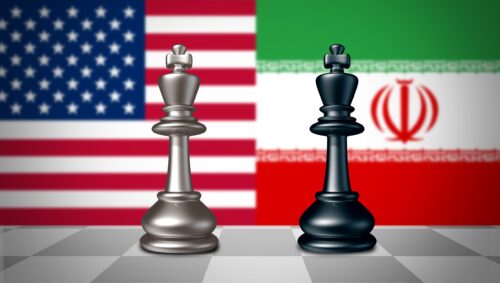
In the grand chessboard of global energy, Iran’s oil, the so-called “black gold”, has become the focal point of a modern-day rush that transcends markets and borders. As oil prices soared to over US$100 a barrel, the global energy market faces immense pressure even as conflict reshapes the flow of supply.
In March 2026, the United States launched a targeted strike on Kharg Island, Iran’s critical oil export hub. While military facilities were hit, the oil terminal, which is responsible for roughly 90% of Iran’s crude exports, has remained largely untouched. Nonetheless, the U.S. had a clear goal – to weaken Iran without triggering a full-blown shock to global oil markets.
Yet despite increasing pressure and ongoing tensions, Iranian oil continues to move through the region, finding its way into global markets. The crucial question remains: If Washington aims to economically isolate Tehran, then why is Iranian oil still flowing? And particularly to China?
Long before any missile strike on Kharg Island, a financial struggle over the daily flow of millions of barrels of oil was already in motion. To understand how energy transactions occur in the modern day, one must first examine the history of the oil market.
In September 1960, officials from Kuwait, Iran, Saudi Arabia, Iraq, and Venezuela met in Baghdad to establish the Organisation of Petroleum Exporting Countries (OPEC) with the goal of shifting market control from the industrialised West using the weapon of “negotiated profits”. As the association imposed embargoes, the price of oil rose from an average of $2.48 in 1972 to $11.58 by 1974, plunging the global economy into crisis.
By the 1980s, the dynamics of control began to shift as a result of the introduction of crude oil futures on the New York Mercantile Exchange (NYMEX). By making it a financial asset, crude oil prices were increasingly determined not only by physical supply and demand but also by market speculation. In light of this, the United States found a new weapon—sanctions.
In 1995, Iran signed a $1 billion deal with ConocoPhillips. In response, President Clinton responded with a three-step retaliatory approach. First, he signed an executive order prohibiting US companies from participating in Iran oil development, effectively killing the ConocoPhillips deal. Months later, he further implemented a comprehensive investment embargo against Iran. Finally, he pushed Congress to pass the Iran and LIbya Sanctions Act (ILSA). This act introduced secondary sanctions designed to “force foreign companies not to invest in Iran’s oil and gas industry”.
By the 2010s, subsequent US administrations had expanded this framework by cutting Iran off from the SWIFT system—a global messaging network that banks use to tell each other to move money across different countries— and attacking the Central Bank of Iran to completely sever their connection with the international financial system. Therefore, launching the “maximum pressure” campaign in 2018 aimed at reducing Iranian oil exports to zero.
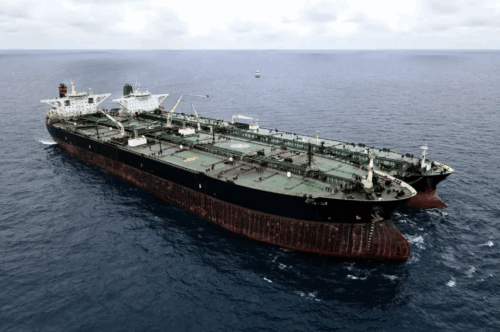
But Iran did not yield. Their business still operates as usual. They’ve built an oil smuggling network through the shadow fleet—a vast and covert network of old tankers that relied primarily on deception to transport Iranian oil. They turned off their transponders to “ stealth”, transferring cargo at sea through clandestine transfers. Furthermore, forged documents disguise Iranian crude as Malaysian crude or Omani crude. This allows Iranian ships to be registered in lax jurisdictions and to be insured through low-recognition foreign insurance companies.
When maximum-pressure sanctions failed to hamper Iran’s economy, Washington opted for direct military action. This shift in strategy marked a clear escalation from financial pressure to direct physical force, with the U.S. targeting Kharg Island — one of Iran’s largest oil export hubs on the Persian Gulf.
With an average of 20 million barrels a day traveling through the Strait of Hormuz in 2024, Kharg Island is positioned strategically and plays a crucial role in the Iranian oil export industry. As Iran’s economic lifeline, destroying the oil infrastructure in Kharg Island would effectively mean disrupting 90% of Iran’s oil exports, leaving irreparable damage upon the Iranian export system.
President Trump has framed Kharg Island as a key target in the battle against Iran, stating on March 13 that American forces have “totally obliterated” every military target in Kharg Island. Shortly after the beginning of the U.S.-Israeli war, Iran closed the Strait of Hormuz — an essential route for 20% of the world’s crude oil and natural gas shipments — by threatening to attack ships that attempted to pass through the waterway. While the U.S. did not directly attack Kharg Island’s oil infrastructure, they have threatened to destroy it if Iran were to continue to interfere with the passage of ships and large oil tankers through the Strait of Hormuz.
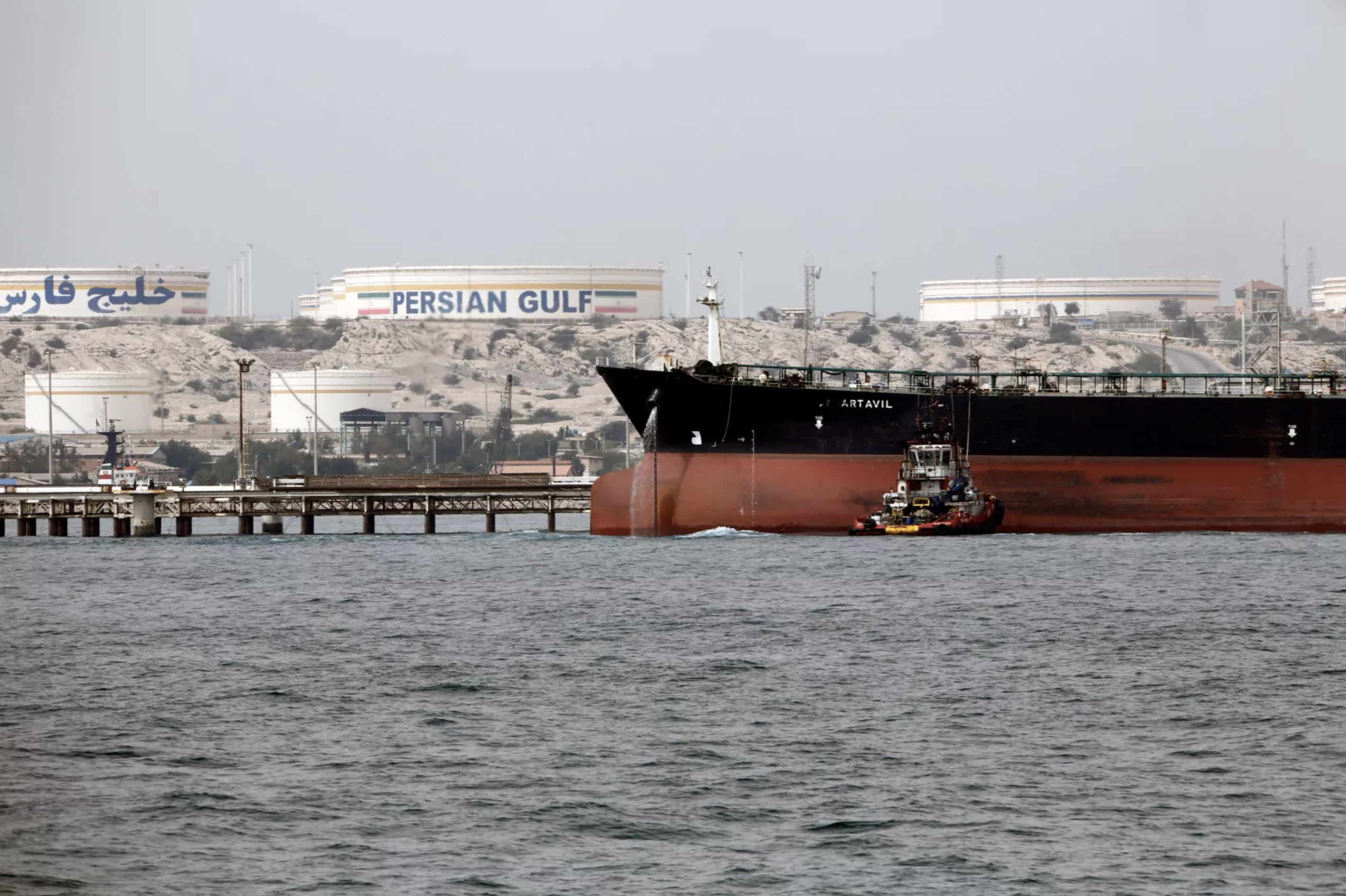
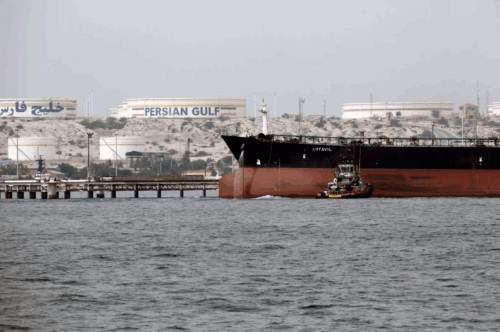
Despite the military strikes, however, Iranian exports did not collapse. According to maritime intelligence analysts, Iran’s shadow fleet strategy has remained intact, steadily exporting Iranian oil towards East Asia regularly. More specifically, Malaysia seems to have recently been a key location for illegal Ship-To-Ship (STS) transfers, with 679 instances of sanctioned Iranian oil in Malaysian waters in 2025. Demand for this activity is driven largely by China — which purchases roughly 90% of Iran’s exported oil — as a means of securing energy supply and importing oil at a heavily discounted price.
The persistence of Iran’s shadow fleets, even with increased financial and military pressure, is a testament to the resilience and flexibility of Iran’s oil system. Despite various attempts to disrupt oil transports, Iran adjusted their exports faster than the U.S. could hinder them, with the shadow fleets proving to be a crucial tactic for Iran.
As sanctions and military pressure have failed to curtail Iran’s oil exports, what began as a workaround has now shifted into a parallel system for Iran to operate beyond Western oversight. Iran’s “shadow fleet”, a network of decade old tankers using ship-to-ship transfers (where cargos are transferred between seagoing vessels positioned next to each other), AIS signal manipulation (when a ships hide its cargo loading points and vessel movements on the AIS), and reflagging (when a tanker changes from one designated country flag to another) has expanded significantly over the recent years. Allowing sanctioned crude oil to flow despite enforcement efforts. What once was an evasion tactic has now become a structured system within the global energy market.
At the center of this system is China, the primary beneficiary of Iran’s sanctioned crude oil. Reports highlight that China has continued importing large volumes of discounted Iranian crude through intermediaries and opaque shipping routes, bypassing sanctions by the U.S. while securing a stable energy supply. This not only undermines the intended impacts of sanctions but also signals the emergence of a divided global trade system—one governed by the Western regulatory frameworks, and another operating through an informal and less transparent network (88 recorded Iranian vessels). In effect, this fabricates a dual pricing environment, where sanctioned oil trades at significant discounts (around $12 per barrel) outside formal markets, further weakening the influence of traditional benchmarks such as Brent crude.
For Australia, the impacts and implications are indirect but significant. The expansion of opaque oil trading networks introduces inefficiencies into the global pricing systems seen with Russia’s $90 Billion Shadow Network, making the global oil markets less predictable and transparent. Additionally, the rise of a parallel oil market challenges the credibility of sanctioning frameworks that Australia supports, potentially also weakening collective economic pressure tools. As China continues to secure discounted energy through the Straits, its industrial capacity may strengthen, influencing demand patterns for Australian exports over time. In the long term, this may also encourage other sanctioned producers such as Russia and Venezuela to adopt a similar shadow trade practice, further fragmenting the global energy markets.
Through sanctions and military force, what was meant to be a decisive reset has instead revealed the limits of sanctions and military force. Despite the sustaining pressures, Iranian oil continues to flow within the global market, just not within the Western system. The shadow fleet transformed from a tool for countries in the short term into a parallel network that operates way beyond Western controls.
More critically, this signals a shift in the global energy order. As China continues to absorb discounted Iranian crude, a dual system is emerging, one regulated, and one opaque. In this contest between the two, the question is not whether sanctions or strikes can contain Iran, but whether each system can keep pace with the other in delivering the greatest economic advantages for its participants.
https://theweek.com/world-news/dark-fleets-china-ocean
https://www.ft.com/content/7f8e97fa-12e6-41e1-9ada-cc292961a4c8?syn-25a6b1a6=1
https://www.abc.net.au/news/2026-03-19/verify-ais-spoofing-in-the-strait-of-hormuz/106468994
https://www.uscc.gov/research/china-iran-fact-sheet-short-primer-relationship
https://www.npr.org/2026/03/19/nx-s1-5750514/trump-iran-war-kharg-island-oil
https://www.eia.gov/todayinenergy/detail.php?id=65504
https://www.bbc.com/news/articles/c15x1y8d37vo
https://www.opec.org/brief-history.html
https://www.ig.com/uk/commodities/oil/history-of-crude-oil-price
https://www.investopedia.com/financial-edge/0410/countries-sanctioned-by-the-u.s.—and-why.aspx
https://www.latimes.com/archives/la-xpm-1995-03-15-fi-43080-story.html
https://ofac.treasury.gov/media/5751/download?inline
https://www.abc.net.au/news/2012-03-16/swift-to-cut-off-blacklisted-iranian-banks/3893620
https://2017-2021.state.gov/maximum-pressure-campaign-on-the-regime-in-iran/
https://rsilpak.org/2019/iran-the-us-and-economic-warfare/
The CAINZ Digest is published by CAINZ, a student society affiliated with the Faculty of Business at the University of Melbourne. Opinions published are not necessarily those of the publishers, printers or editors. CAINZ and the University of Melbourne do not accept any responsibility for the accuracy of information contained in the publication.