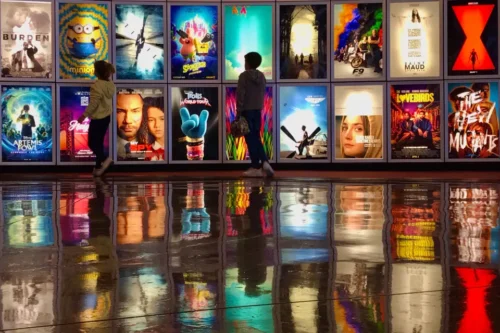
 Figure 1 – The movie industry of today looks very different compared to the past
In recent decades, the major film studios of the world have gotten pretty creative in convincing their audiences that what they’re watching is not just a rehashing of the same movies they’ve seen before. However, with it seeming like there exists a sequel to practically every major film now, moviegoers are gradually getting tired of the lack of new ideas and creativity in the cinema. While major film studios and producers continue to churn out these low-risk projects to earn reliable profits, it appears that those who are taking the risk to produce new creative works are actually smaller content creators. Further, it appears that such risks are paying off incredibly well financially, which may be a reflection of the true preferences of the general cinema audience who have been starved of fresh ideas.
In this past decade, Hollywood has become increasingly adamant that their new films are not ‘reboots’ or ‘sequels’, but rather ‘companion pieces’, or, in the case of the latest installment of Scary Movie, a ‘rebootquel’. Disney insists that the live-action remakes of all their ‘golden-age’ classic animated movies such as Aladdin and Beauty and the Beast are ‘reimaginings’. Meanwhile, when releasing the 2022 reboot of Top Gun, Paramount titled it Top Gun: Maverick to avoid ostracizing audiences who hadn’t seen the 1986 original.
In just 2026 alone, we have already seen the likes of Scream 7 and The Devil Wears Prada 2 hit theatres, while anticipated upcoming releases include Batman Part Two and Dune: Part 3. From this, it appears that Hollywood has a proclivity for recycling pre-existing IPs: 6 out of the current top 10 films of 2026 are sequels, and 3 are adaptations of existing material (The Odyssey, Michael, Project Hail Mary), leaving only one original film (Obsession).
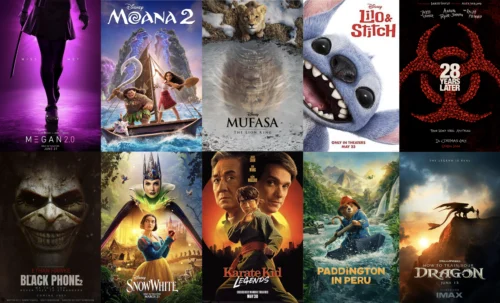 Figure 2 – Cinemas are now filled with projects that utilise already-existing IPs
For over a century, Hollywood was synonymous with film, monopolizing cinema screens globally and delivering many beloved films. Today, it is dominated by 5 major media conglomerates: Disney, Universal, Sony Pictures, Paramount, and Warner Bros. However, in recent years, Hollywood’s grasp on the film industry seems to be slipping. Since the COVID-19 pandemic, the volume of film production has been on the decline and unemployment has risen, exacerbated by the 2023 Hollywood labour disputes by the WGA and SAG-AFTRA, and later the 2025 Californian wildfires. When put in combination with the recent rise of independent or foreign film studios, it appears that Hollywood no longer stands as the sole contender within cinema.
As such, it seems that Hollywood’s current aggressive push for reboots, sequels, and adaptations is more of a defensive tactic, banking on nostalgia and familiarity to drive up box office sales whilst minimizing the risk of introducing new and unfamiliar IPs to the audience. With box office profits being a significant driver for studios producing these films, original and untested ideas fail to attract shareholders, encouraging filmmakers to tap into pre-existing IPs instead. Since becoming the highest-grossing movie of all time, Avatar (2009) has four sequels lined up, of which the first two have already become box office successes. In total, the franchise has already grossed over $6.7 billion USD worldwide so far. In fact, seven out of the current top ten highest-grossing movies of all time are part of well-known franchises, including Star Wars, the Marvel Cinematic Universe, and, of course, Avatar. Here, their continued success indicates that there is still a strong, enduring market for these cinematic universes, and thus signals to the investors of these studios that these projects carry the lowest risk while maximising returns, and therefore the natural choice to make.
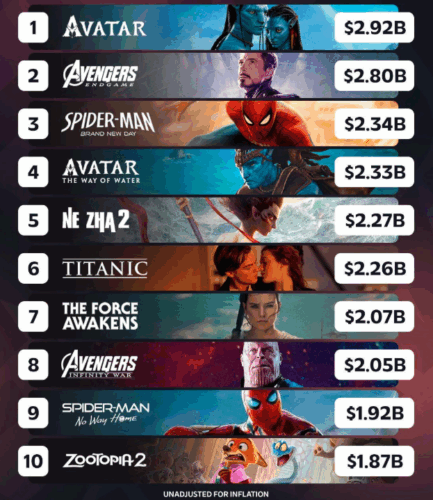 Figure 3 – The current top 10 highest-grossing movies of all time
In January 2026, Mark Fischbach, better known to his 39 million subscribers on YouTube as Markiplier, released Iron Lung, a self-financed sci-fi horror film with a budget of just $3 million USD. Despite having no studio backing and no traditional distributor, the film screened in over 4,000 theatres globally and earned $17.8 million USD in its first three days, clearing its break-even point almost immediately after release. Rather than being supported by a big producer like most films, Markiplier managed to leverage the loyal audience he had spent over a decade building on YouTube to be the ones pushing for his film to be released into cinemas instead.
 Figure 4 – Markiplier’s Iron Lung was a fully independent project with no big studio involvement
Meanwhile, the phenomenon earlier this year that is Obsession tells a different version of the same story. Curry Barker, the film’s writer, director, and editor, is a genuine outsider by background, a YouTuber with no prior studio relationship who turned down an offer to adapt an existing viral short into a franchise property and pitched something original instead. Whilst the finished film was produced through Blumhouse Productions and distributed by Focus Features and Universal, Blumhouse did not take a chance on an unknown. It simply attached a studio to a creator who had already built an audience, once the commercial upside was already visible. Such a potential commercial upside proved to be true when Obsession, on just a $750,000 USD budget, returned over $500 million USD worldwide, making it one of the world’s most profitable cinema projects undertaken to date.
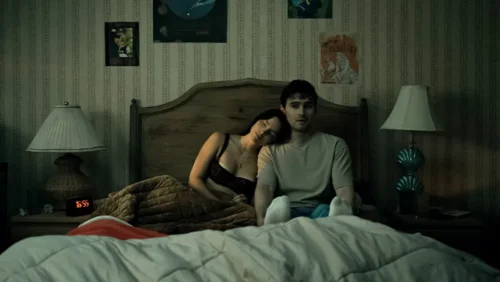 Figure 5 – Obsession was received extremely well by audiences and became a viral sensation
Overall, both of these films prove the same underlying point: that the industry’s most original ideas are currently coming from people entirely outside the traditional studios. Where they diverge is what happens after the idea succeeds. Iron Lung stayed independent from the very start. Obsession’s originality was authentic, but the moment it proved viable, a major studio moved to attach itself to the profits and the distribution. That is not creativity being pushed down. It is creativity being recognised, and absorbed.
Strikingly, this pattern isn’t new. Disney’s acquisitions of Pixar in 2006, Marvel in 2009, and Lucasfilm in 2012 followed the same arc decades earlier, buying studios once their output began reliably outperforming Disney’s own rather than competing with them. Here, Blumhouse and Barker are doing the same, just at a smaller scale and at a faster pace. Creativity is found outside the system, given the chance to prove itself at low risk, and then folded back in once it pays off. The real test of whether anything has actually changed is what Blumhouse does next. Funding Barker’s next original idea would be genuine investment in creative risk. Turning Obsession into a franchise would simply recycle the pattern with a smaller price tag.
When inspecting the current state of the cinema industry, it doesn’t take a genius to note the countless sequels, remakes, and other films that are remarkably similar to existing IP. As a result, cinema’s true creativity hasn’t disappeared into the hands of small creators so much as it’s been pushed there, because the traditional system stopped being willing to take the risk itself. However, regardless of these consequences on creativity in film, it is undeniable that from a commercial standpoint, Disney does appear to be making the correct decision in producing yet another live-action remake of one of their animated classics. As a result, it seems increasingly relevant for both the general audience as well as those behind the production of movies today to ask themselves the question: Is true creativity in cinema increasingly in the hands of small creators?
The CAINZ Digest is published by CAINZ, a student society affiliated with the Faculty of Business at the University of Melbourne. Opinions published are not necessarily those of the publishers, printers or editors. CAINZ and the University of Melbourne do not accept any responsibility for the accuracy of information contained in the publication.