On June 1st 2026, Anthropic confidentially submitted a draft registration statement, marking the start of a process that could make it the first AI company that could have a trillion-dollar valuation. With the valuation projected to be somewhere between USD$1-2 trillion, this is shaping up to be one of the largest technology listings in years. This raises the question: When a company this large finally goes public, how do the winnings get split, and who holds the real power?
First founded in January 2021 by a group of ex-OpenAI researchers led by Dario and Daniela Amodei, Anthropic quickly managed to raise its Series A funding of US$124M by May 2021. This was led by Jaan Tallinn, investor and co-founder of Skype, among other investors such as Facebook co-founder Dustin Moskovitz and ex-Google CEO Eric Schmidt. The goal of this funding was to research and develop large-scale AI systems. Anthropic Series B raised a further $580M with controversial investments from disgraced FTX CEO Sam Bankman-Fried and the team from Alameda research. Anthropic continued to raise funding rounds, most recently on May 28, 2026 raising $65B in series H providing them with a value of $965B at the time. This fundraising history has led to a highly diffuse ownership structure within the company. While the ownership structure is still unknown, it is currently believed that founders and employees are the largest share of ownership. According to 2025 court filings, Alphabet owns 14% and is capped at 15%, with no voting rights or board seats. Nvidia and Microsoft also invested in 2025, contributing $10B and $5B respectively. Amazon is considered the largest single outside investor, with approximately $8B invested and a further $25B committed.
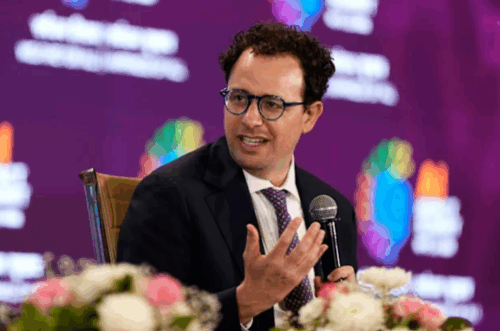
Figure 1: Dario Amodei, chief executive officer and co-founder of Anthropic.
While many companies would worry about losing control of the company after receiving major investments such as these, Anthropic deliberately separates ownership and control of the company. The company operates under a Long-Term Benefit Trust (LTBT) governance structure, which means an independent body of 5 financially disinterested members who have the authority to select and remove members of the board in the interest of protecting the mission of advancing AI for the long-term benefit of humanity. This helps Anthropic safely allow investment from major backers such as Google or Amazon without giving up company control. Anthropic has been strengthening its financial leadership since 2024, when the company appointed Krishna Rao as the first CFO. Considering his previous experience from his leadership role in Airbnb’s $3.7bn IPO, his appointment signaled Anthropic’s intention to strengthen the financial capabilities needed for a public listing. As Anthropic prepares for its IPO in August, it reported strong revenue of $11.5bn in Q2 of 2026, while in Q2 of 2025 it reported $787M.
On February 13th, 2026, Elon Musk made the claim on X that Anthropic “is misanthropic and evil.” This attack came as a result of Musk’s belief that Anthropic was poised against Western Civilisation, expressing his belief that left wing bias has been built into Claude models.
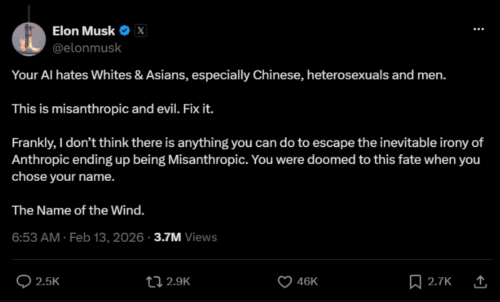
Figure 2: Musk takes to X to scathe Anthropic
Yet, three months later Musk’s largest company based upon market valuation, SpaceX and Anthropic announced a deal giving Anthropic access to the full compute capacity of Colossus 1 until May 2029, a Memphis-based data centre which housed approximately 220,000 Nvidia processors. With the construction of Colossus 2, a newer data centre where many of the primary training workloads were moved to, Colossus 1 was running at a fraction of its capacity. With this in mind, the three-year lease makes a lot of sense for Musk’s SpaceX from a numbers standpoint, particularly with the deal seeing Anthropic paying USD$1.25 billion per month to SpaceX, which works out to approximately USD$45 billion for the 3 years total. Taking to X once again following the establishment of this deal, Musk expressed that SpaceX “will provide compute to AI companies that are taking the right steps [for] humanity,” heavily suggesting he had completely retracted his previous condemnation.
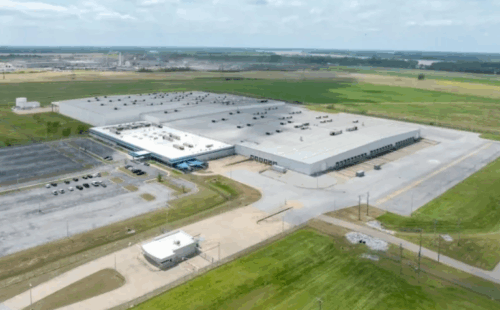
Figure 3: Colossus 1 infrastructure was underused in the training of Grok
However, in the same post Musk claimed that SpaceX could reclaim Colossus 1 at any point if Anthropic were to act in any way which may harm humanity. No source has been able to verify the legitimacy of this clause within the contract. Yet, it does suggest that this deal may not necessarily be an act of reconciliation between Musk and Anthropic, but rather a mutually beneficial reallocation of infrastructure and funds between SpaceX and Anthropic. Nevertheless, the deal makes it clear that whilst Musk owns no Anthropic equity, through this infrastructure alone he holds unique leverage over one of xAI’s fiercest rivals.
Deals like the one with SpaceX show just how tightly Anthropic’s growth is now bound up with the biggest names in tech and finance, yet that entanglement is precisely why investors are watching its IPO so closely. Even though Anthropic is growing fast, many investors are still worried that AI companies overall might be overvalued. A survey by Deutsche Bank found that a tech bubble popping was the single biggest worry investors had going into 2026, with 57% putting it in their top three concerns, which is the highest number ever recorded in that survey. That worry hasn’t gone away either, with analysts still pointing to high stock prices and a shortage of AI hardware as warning signs that the AI boom may be near its peak.
Figure 4: The OpenAI Stock That Doesn’t Exist — Yet
Anthropic isn’t the only company thinking about going public. OpenAI, its biggest rival, secretly filed its own paperwork to go public back in June 2026. OpenAI’s CFO, Sarah Friar, has said the company will likely list on the stock market “in 2027”, but possibly earlier “if our business continues to inflect” (meaning if growth keeps accelerating). Interestingly, she’s reportedly pushed back against CEO Sam Altman, who wanted to list the company as early as 2026, because she’s worried OpenAI isn’t ready for the level of public scrutiny that comes with being listed. This disagreement shows just how much pressure both companies are under to get this right.
Overall, that’s really what matters here: both Anthropic and OpenAI have operated pretty secretively so far, but going public would force them to share their finances, explain their sky-high valuations every few months, and answer to everyday shareholders instead of just private investors. For people looking to invest, it’s a chance to get in on the AI boom directly, as well as a gamble that this kind of rapid growth can survive the kind of public scrutiny these companies have never faced before.
Together, these three points show a bigger change happening in how money moves through the AI industry. Anthropic’s careful setup with an independent board and an experienced CFO shows the company trying to get huge amounts of investment from companies like Google and Amazon, without losing control over its own decisions. The SpaceX deal shows that even rivals who publicly criticize each other are still willing to work together when there’s enough money and resources involved. And now, with both Anthropic and OpenAI moving closer to going public despite fears of an AI bubble, it’s clear these companies are willing to accept more public attention and pressure in exchange for access to bigger amounts of money. The real question left for investors is whether this growth is actually sustainable, or if the AI industry is moving too fast to slow down and think it through.
REFERENCES:
https://intellectia.ai/news/etf/top-market-risks-for-2026-ai-bubble-and-nine-others–survey-findings
https://www.fool.com/investing/2026/08/24/if-an-ai-bubble-burst-is-coming-warren-buffetts-19/
https://money.com/how-to-invest-in-openai-before-ipo/
The CAINZ Digest is published by CAINZ, a student society affiliated with the Faculty of Business at the University of Melbourne. Opinions published are not necessarily those of the publishers, printers or editors. CAINZ and the University of Melbourne do not accept any responsibility for the accuracy of information contained in the publication.