Football is life, and football is also profitable. Following a record-breaking US$15 billion revenue in the 2026 World Cup, FIFA president Gianni Infantino made the controversial announcement to privatise FIFAs commercial operations. While FIFA claims this decision will drive more money to support member associations, many feel his choice could accelerate price gouging and push fans out of a sport that holds deep cultural significance.
Proposed on July 28, 2026, Fifa Forward Enterprise (FFE) would have created a commercial subsidiary of FIFA. This body would manage the business operations of major sporting events such as the World Cup and the Club World Cup. This subsidiary was to be valued at US$20 billion, with 20-30% sold off to private investors. If the proposal was to act as intended, this would see FIFA and its associations retain control over major sporting events, whilst additional revenue would be generated for the development of football. Attempting to make this clear, FIFA issued a statement in which it stated, “nobody is selling football. This is not something FIFA would ever entertain.” Gianni Infantino was therefore arguing that the proposal was a way in which FIFA could capture the full commercial value of its competitions, without losing any control over them.
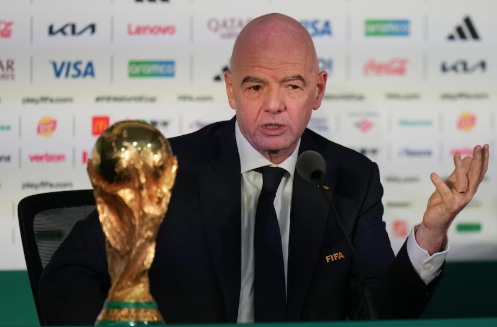
Figure 1: Gianni Infantino: “nobody is selling football”
US$20 million was to be issued to each of FIFA’s 211 member associations (MAs) within the upcoming football cycle beginning 2027, and finishing 2030. This figure was to be “irrespective of its individual support.” However, after unanticipated levels of opposition, FIFA sweetened the deal for MAs that were to back the proposal. For those who signed up within 53 days of the proposal, US$40 million would now be awarded to the MA within the football cycle, whilst only US$10 million would be given to those who rejected the proposal. This meant nations who rejected the proposal would only receive US$2 million more than they had in the previous football cycle, as US$8 million was awarded to each MA from 2023-2026. Sources opposed to the plan told The Times the scheme amounted to “pure bribery.” Member associations were to vote on this plan at an upcoming FIFA congress, with Infantino pressing for early sign-ups so that MAs could lock in their US$40 million allocation. Nevertheless, FIFA continued to stress that the proposal was optional, and that FFE was “an opportunity, not an obligation.”
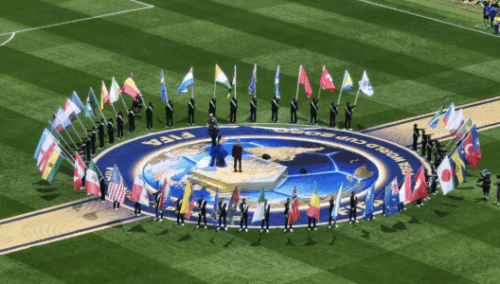
Figure 2: MAs that backed the proposal could have been issued USD$40 million
The backlash against Infantino’s FFE proposal has escalated into a coordinated revolt across multiple confederations. Leaders of the Union of European Football Associations (UEFA), Asian Football Confederation (AFC), and Confederation of North, Central America and Caribbean Association Football (CONCACAF) have publicly condemned the proposal, framing it as an attempt to sell influence over the sport. UEFA has delivered a strong statement, declaring that “none of us are the owners of football,” and announced that its 55 member associations would begin boycotting FIFA events until the proposal was withdrawn.
Leadership from the Jordan Football Association (JFA) alleges that Infantino engaged in blackmail to secure political support for his presidency. Current president of the JFA, Prince Ali Bin Al Hussein, has opposed Infantino for the last decade and previously ran against Infantino in previous FIFA elections. The blackmail accusations claim that Infantino approached the JFA stating it would be in their best interest to offer him endorsement. This comes as JFA’s grievances centre on fans facing exorbitant ticket prices, visa denials, unpaid reward money, and Jordan’s national team being taxed by the U.S. government while teams based in Canada or Mexico did not have to pay any taxes. These accusations align closely with UEFA’s broader narrative that Infantino has consolidated and abused power to further his personal agenda.
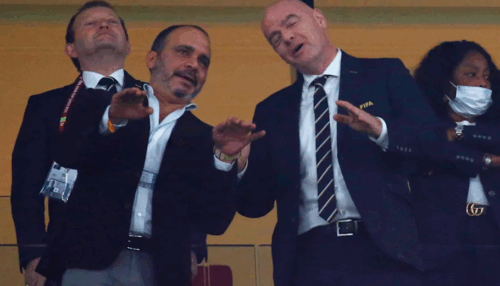
Figure 3: Prince Ali bin Hussein with Gianni Infantino in the stands during an Arab Cup match in 2021
Despite the growing opposition, removing Infantino remains challenging under FIFA’s voting structure. Currently FIFA operates with one vote per member association regardless of that association’s size or revenue. While this provides all associations the benefit of an equal playing field it also means an election can easily be swayed by financially supporting smaller federations. FIFA as an organisation has no specific provision regarding a presidential vote of no confidence. However an extraordinary congress may be called if 20% of MAs request it and the congress could place a no-confidence motion on the agenda. As backlash continues, Infantino still intends to seek re-election in March with the continued support of Confederation of African Football (CAF) and several Arab football associations.
To understand why the current controversy surrounding FIFA feels so damaging, it helps to look back to 2015, when a wave of corruption allegations swept through the organization. In May 2015, the U.S. Department of Justice released a criminal indictment accusing seven FIFA executives of accepting bribes totalling $150 million over nearly two decades. On the same day, Swiss police arrested several of them in Zurich. Those involved included FIFA Vice Presidents Jeffrey Weber and Eugenio Figueiredo, former CONCACAF president Jack Warner, and FIFA Secretary General Jerome Valcke. Valcke was later dismissed on suspicion of financial crimes and banned from any football-related activities. Then-FIFA president Sepp Blatter was also suspended for breach of ethics and ultimately banned from any football activities. Much of the corruption was directly related to the way the 2018 and 2022 World Cup hosting rights were awarded to Russia and Qatar, respectively. This scandal changed public perception of FIFA: it was no longer just a sports organisation, but an organisation where positions of power could be used for personal gain and where effective oversight was lacking.
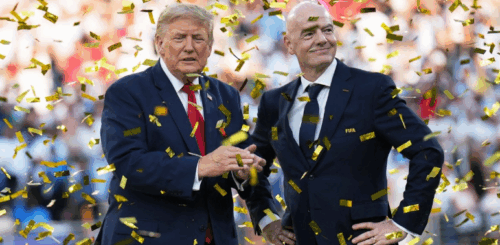
While the current controversies differ in specific details, the underlying concerns are strikingly similar. During the 2026 World Cup, the US president personally called Infantino, urging a review of striker Folarin Balogun’s red card suspension, after which FIFA suspended the punishment. Critics argue that this decision set a precedent for direct political interference, undermining the fairness of the tournament. This FIFA president has previously been under scrutiny for a series of controversies, including moving FIFA offices to Trump Tower and abandoning his earlier stance that “Football must never become a playground for political power.” Weeks later, this close relationship resurfaced. FIFA announced plans to create a $20 billion commercial subsidiary called “ FIFA Forward Enterprise,” with up to 20% of the shares to be sold to private investors. The plan reportedly stemmed from private meetings between the FIFA president and Joshua Kushner, the brother of Jared Kushner, Trump’s son-in-law. Even the president’s predecessor, Sepp Blatter, warned that “ the close relationship between the FIFA president and the US president has reached a financial dimension that is deeply damaging football”. What connects these two issues is a common structural problem; decision-making power is concentrated in the hands of a very small number of people, and there is a lack of institutional checks and balances on the use of this power.
Ultimately, merely replacing the FIFA president will not resolve the deeper issues. History shows that without structural reform, a change in leadership simply produces new figures wielding the same unchecked power. What FIFA truly needs is independent and transparent oversight to ensure that no leader can ever again place themselves above scrutiny.
References:
https://www.britannica.com/event/2015-FIFA-corruption-scandal
https://www.bbc.com/sport/football/56508619
https://www.nytimes.com/2020/04/06/sports/soccer/qatar-and-russia-bribery-world-cup-fifa.html
https://www.nytimes.com/2026/07/05/us/politics/trump-fifa-balogun-world-cup.html
https://www.bbc.com/sport/football/articles/cvgmmmgemd8o
https://sports.yahoo.com/articles/disgraced-fifa-president-sepp-blatter-212352595.html
The CAINZ Digest is published by CAINZ, a student society affiliated with the Faculty of Business at the University of Melbourne. Opinions published are not necessarily those of the publishers, printers or editors. CAINZ and the University of Melbourne do not accept any responsibility for the accuracy of information contained in the publication.