Bryan Johnson (Source: The Australian)
The desire to avoid aging is nothing new. The trillion-dollar industry built on selling that desire is. Somewhere between turmeric shots, colostrum supplements and 5 AM cold plunges, the wellness industry quietly superseded the pharmaceutical industry, and it was not very difficult to do. Decades of controversies, opioid litigation, and price inflation practices had already done the work, leaving the public so wary of the institutions meant to protect them that almost anything else looked like an improvement. The wellness and longevity industry was prepared to welcome this skepticism, by offering transparency and individual autonomy in place of a system that had consistently betrayed the trust of the people it meant to protect.
Influencers, biohackers and former tech millionaires who take pictures of their blood panels for Instagram are the new faces of medicine. These individuals are proficient enough in scientific language to appear reputable and knowledgeable to audiences who have no realistic way of knowing the difference. Ageing is seen as a weakness, recovery is reframed as inefficiency and there always seems to be a product waiting to emerge that promises to fix any flaw. Beneath the optimised routines and miracle supplements lies a regulatory gap that no one has been inclined to bridge.
By 2029, the Global Wellness Institute has forecast the wellness economy to surpass the combined growth of green economy, international tourism and information technology reaching nearly $10 trillion (Global Wellness Institute, 2025). What is remarkable is not the scale alone, but the speed. An industry that emerged in opposition to Big Pharma has expanded to four times its size and now dominates consumer markets, yet operates by an entirely different set of rules. Unlike pharmaceuticals, most wellness products aren’t required to prove they work, which leaves millions of consumers reaching for any new product that promises a solution.
Underpinning this expansion, is a widespread redirection away from reactive healthcare, towards prevention and longevity. The market for longevity supplements alone is set to double to $20.2 Billion by 2033 (Growth Market Reports, 2024). These numbers however only tell a part of the story. Consumers are not merely purchasing products, they are purchasing an identity, one that reframes ageing as a flaw rather than a biological truth.
Beyond the changes in consumption patterns, in many ways, the rapid expansion of the wellness economy is a tale of institutional failure. Public trust in pharmaceutical companies has eroded steadily due to price gouging controversies, opioid lawsuits, and a well-documented pipeline between regulatory offices and pharmaceutical boardrooms. Nine of the last ten FDA commissioners went on to work for the industry they were appointed to oversee, a statistic that speaks for itself (Doshi, 2024). This lack of trust paved the way for the emergence of a new market. The rise of peptides captures this shift, as synthetic compounds originally developed for clinical use are now widely available online, and marketed directly to consumers as longevity tools with little regulatory infrastructure standing between manufacturer and buyer.
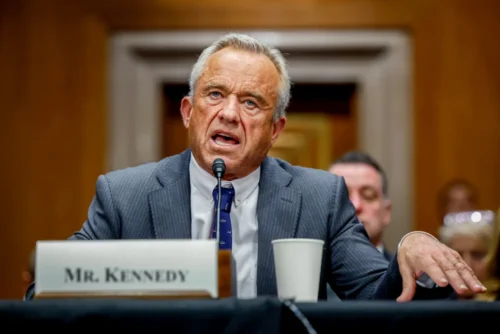
Robert F. Kennedy (Source: NBC News)
If the wellness economy needed a political endorser, there is simply no one better than US secretary of Health and Human Services, Robert F. Kennedy Jr. – a man who built his public persona by campaigning against pharmaceutical firms. His Make America Healthy campaign (MAHA) postulates that pharmaceutical companies have amassed a significant amount of influence over the institutions meant to hold them accountable. However, it was found that Kennedy and his other MAHA allies earned close to $3.2 million by pushing wellness products and criticising the pharmaceutical industry, indicating that the movement’s financial ties to the wellness sector should also be examined (Armour, 2025). In fact, his nominee for surgeon general established a $300 million company that sold glucose monitors to non-diabetics, a product for which there is minimal clinical research or proof of value. Kennedy’s ascent does not signify a departure from the system but rather a rearrangement of it. It embodies the continuation of the wellness industry under new management, one that employs the language of empowerment and human choice, even though the underlying economic principles appear to be remarkably similar.
Millions now take supplements promoted by their favorite influencers, but behind every viral supplement is a web of sponsorships, affiliate codes, and undisclosed financial ties. Influencers like bodybuilder Sam Sulek and tech millionaire Bryan Johnson have turned their bodies into a business documenting their lives, the supplements they take, and selling their routines back to their audiences.

Sam Sulek (Source: Generation Iron, 2026)
Instead of being grounded in clinical evidence or regulatory approval, health on social media has built itself around aesthetics, optimisation, and quick results. TikTok, with millions of users, has become one of the biggest platforms for the dissemination of medical information, but this does not come without issues. Researchers have found large amounts of unchecked misinformation as well as undisclosed conflicts of interest which makes it difficult to know the credibility of information spread (Comp et al., 2020). A 2023 Washington Post investigation discovered that registered dietitians, physicians, and fitness influencers were privately being paid to create content that was not clearly labelled as sponsored. This investigation found videos sponsored by American Beverage, Canadian Institute, and Carlson Labs promoted their products without clear disclosure, and unproved supplements being promoted for parents to give children (O’Connor et al., 2023). Within an ecosystem like this the most profitable content is not necessarily the most reliable. Influencers are rewarded for novelty, confidence, and the aesthetic appeal of a healthier lifestyle.
Few illustrate this dynamic more clearly than Sam Sulek, whose rapid rise has been fuelled by a blend of authenticity, aesthetic appeal, and open discussion about what he personally uses. He has no scientific background, but gains credibility through his experience as a professional bodybuilder. In a recent video, Sulek announced he had become a co-owner and partner of New England Biologics (NEB), citing he joined the company because he personally uses the products and believes the business will grow after peptides become regulated (Sam Sulek, 2026).
Yet NEB’s marketing tells a different story. Despite the current illegality of peptides for human use, the company openly advertises them as wellness products with the home page featuring Sulek in a DSIP advertisement promoting it as “precision sleep support”. DSIP has existed for decades, yet little is known about how it works on humans (Williams, 2019). Despite this, NEB openly advertises its use on humans but labels it “research chemical only”. Experts warn that experimental peptides can contain dangerous contaminants, disrupt biological processes, and react negatively to medication posing a serious risk to humans (Davis, 2026).
On the other end of the spectrum is influencer Bryan Johnson, the tech entrepreneur who calls himself “the most well-documented man in human history”. Guided by his philosophy of “don’t die”, Bryan Johnson has spent the last 5 years working on de-aging himself, with the ultimate goal of never dying. To do this he tracks hundreds of biomarkers and undertakes many experimental procedures with unproven track records, takes dozens of pills daily, and publishes the results for free on his protocol he calls the Blueprint. While the routine is published online for free it underpins a growing commercial ecosystem where Johnson sells supplements, meals, diagnostics tests, as well as a health app all alongside his website (Blueprint, 2026). In November he announced that Blueprint raised $60 million from Silicon Valley investors and celebrities including Kim Kardashian and Paris Hilton (Mosbergen, 2026). The appeal of Johnson and his Blueprint comes from the perceived scientific authority of his many tests as well as the open transparency of his products promise to be without hidden toxins (Blueprint, 2026). Despite the scientific appearance of his experiments, they do not represent scientific proof, operating on a sample size of one. Johnson operates on the aesthetics of metrics rather than clinical scientific studies.
Together, Sulek and Johnson are two sides of the same coin, showing how health advice online is increasingly shaped by aesthetics, performance, and personal branding rather than clinical expertise. One sells authenticity and lived experience; the other sells data and optimisation. Both thrive in an ecosystem that rewards confidence over accuracy, visibility over evidence.
The promotion of the wellness economy sits at an uneasy intersection of personal freedom, commercial interest, and public health. This is a tension that is starkly visible in the world of peptides and performance-enhancing compounds. As the practice moves into the mainstream, the ethical questions it raises deserve serious scrutiny.
Wellness, in the modern world, frames natural human processes like aging and recovery as regrettable, suboptimal, and in need of resolution. This reframing has concrete social consequences; medicalising the human experience, it continuously redefines the baseline of ‘normal’ upward based on the extent to which your performance can be enhanced (Ellison, 2020). This commercial logic is then turbocharged by the influencer economy. Many of the wellness figures platforming these compounds are far more research-literate than their audiences, yet are sometimes financially entangled with the companies whose products they promote, a conflict of interest not always disclosed. Indeed, media figures associated with the MAHA movement (such as Joe Rogan) have platformed peptide and biohacking ‘experts’, positioning deregulation as a political imperative and romanticising the notion of extreme health optimisation. If there were widely regarded merit and little drawback to these products, ignoring the issue of equity and accessibility, there would be no real ethical dilemma toward their promotion. However, biohacking companies still operate without oversight while making large promises without substantive proof, and the average consumer has little way of knowing the difference (Health It On, 2025).
The market’s structural information asymmetry is compounded by a near-total regulatory vacuum. Many vendors label their products, peptides in particular, as “for research use only,” a designation that functions as a liability shield and effective loophole to sell to the public. The FDA has clarified that marketing a substance with clear intent for human use, regardless of labeling, makes it an unapproved new drug subject to enforcement action (MedXDRG, 2025). Without pharmaceutical-grade production obligations, consumers injecting gray-market peptides receive products with no FDA-verified sterility testing, no guaranteed potency, and no confirmed amino acid sequence (MyPeptideMatch, 2026). The FDA’s 2023 placement of BPC-157 peptide on its Category 2 bulk drug substance list, barring compounding pharmacies from producing it, was intended to address exactly this. Instead, it illustrates the limits of prohibition as a regulatory strategy: because of the FDA’s restriction, consumers have flocked to overseas suppliers and websites offering research-grade compounds not intended for human use, raising an entirely new set of safety risks (Stone, 2026). Strikingly, you can even buy some of these products through mainstream e-commerce retailers like Amazon.

BPC-157 Peptide (Source: Prime IV Hydration)
This policy failure has been absorbed into a broader political contest in the US over regulatory legitimacy. The Alliance for Pharmacy Compounding recognises that there is insufficient research on the safety of individual peptides available to the public, yet argues consumers would be better protected if peptides were handled by regulated domestic compounders rather than the gray market (Damon, 2026). That argument has gained traction within the MAHA movement, with Robert F. Kennedy Jr. signalling a likely reversal of the FDA’s 2023 restrictions, arguing the agency acted illegally when it categorised these compounds, due to alleged lobbying by the Pharmaceutical industry in supposedly keeping the public dependent on traditional drugs (Stone, 2026). Whether that reversal improves safety outcomes or simply legitimises an already-thriving gray market remains to be seen. What the debate does clarify is that the current regulation framework is incoherent, implying a need for structured engagement rather than blanket enforcement (Pharmacy Times, 2026). The ethical question, ultimately, is not whether the wellness economy should exist. It already does, at scale. The real question is whether the regulatory architecture surrounding it is honest about that reality.
The wellness industry did not emerge from nowhere. It was built in the space that the pharmaceutical industry vacated. By turning to biohackers and influencers, the public responded to a system that had repeatedly failed it. The solution to this is not better regulation of peptides or stricter disclosure laws, though both are necessary. The deeper problem is that no credible alternative has filled the void. Until mainstream medicine grapples with why millions of people are finding a bodybuilder or a tech entrepreneur more trustworthy than their own doctor, the wellness industry will continue to thrive. Perhaps the most unsettling question is not whether these products work. It is what it says about us that we so desperately need them to.
Sources
Armour, S. (2025, July 14). Vested Interests. Influence Muscle. At RFK Jr.’s HHS, It’s Not Pharma. It’s Wellness. – KFF Health News. KFF Health News. https://kffhealthnews.org/news/article/rfk-jr-trump-maha-conflict-of-interest-wellness-industry-political-influence/
Bendix, A., Fattah, M., & Edwards, E. (2025, February). RFK Jr. says government ignores chronic disease, but that’s misguided. NBC News. https://www.nbcnews.com/health/health-news/rfk-jr-says-government-ignores-chronic-disease-misguided-rcna190042
Blueprint. (2026). Blueprint. https://blueprint.bryanjohnson.com/
Comp, G., Dyer, S., & Gottlieb, M. (2020). Is TikTok the next Social Media Frontier for Medicine? AEM Education and Training, 5(3). https://doi.org/10.1002/aet2.10532
Damon, A. (2026, April 3). RFK Jr. May Reverse a Peptide Ban He Calls “Illegal.” Former FDA Officials Say He Mischaracterized Their Work. ProPublica. https://www.propublica.org/article/peptide-safety-fda-compounding-pharmacies
Davis, N. (2026, April 4). What are peptides, are they safe and is there evidence to back up the hype? The Guardian; The Guardian. https://www.theguardian.com/science/2026/apr/04/what-are-peptides-safety-wellness-products-online
Doshi, P. (2024). Revolving doors: board memberships, hedge funds, and the FDA chiefs responsible for regulating industry. BMJ, q975. https://doi.org/10.1136/bmj.q975
Ellison, K. L. (2020). Upgraded to Obsolescence: Age Intervention in the Era of Biohacking. https://doi.org/10.17351/ests2020.361
The Dark Side of Biohacking: What Your Wellness Guru Isn’t Telling You. (2025, August 12). Health It On. https://www.healthiton.com/post/the-dark-side-of-biohacking-what-your-wellness-guru-isn-t-telling-you
Growth Market Reports. (2024). Growth Market Reports. Growthmarketreports.com. https://growthmarketreports.com/report/longevity-supplements-market
Milenkovich, N. (2026, February 25). Peptides Are Everywhere—So It’s Time for a Serious Conversation. Pharmacytimes.com; Pharmacy Times. https://www.pharmacytimes.com/view/peptides-are-everywhere-so-it-s-time-for-a-serious-conversation
Mosbergen, D. (2026, January 23). Can Aging Be Measured—and Eventually Reversed? TIME; Time. https://time.com/collections/future-of-living/7357365/steve-horvath-longevity-aging/
O’Connor, A., Gilbert, C., & Chavkin, S. (2023, September 13). The food industry pays “influencer” dietitians to shape your eating habits. Washington Post. https://www.washingtonpost.com/wellness/2023/09/13/dietitian-instagram-tiktok-paid-food-industry/
Sam Sulek. (2026, March 20). QNA – Peptides, Protein, and Pump Tips. YouTube. https://www.youtube.com/watch?v=Km4ZXBN2t1w
Stone, W. (2026, March 26). The government may soon lift restrictions on some peptide treatments. NPR. https://www.npr.org/2026/03/26/nx-s1-5758017/the-government-may-soon-lift-restrictions-on-some-peptide-treatments
Team, P. E. (2026, February 17). Is BPC-157 Legal? FDA Status and Regulations Explained (2026). MyPeptideMatch.com. https://www.mypeptidematch.com/blog/bpc-157-legal-status
The Global Wellness Economy Hits a Record $6.8 Trillion and Is Forecast to Reach $9.8 Trillion by 2029 – Global Wellness Institute. (2025, November 15). Global Wellness Institute. https://globalwellnessinstitute.org/press-room/press-releases/the-global-wellness-economy-hits-a-record-6-8-trillion-and-is-forecast-to-reach-9-8-trillion-by-2029/
Williams, J. (2019). Sleep, Immunity, and Stress: Novel Insights From Drosophila. Elsevier EBooks, 349–362. https://doi.org/10.1016/b978-0-12-813743-7.00023-2
The CAINZ Digest is published by CAINZ, a student society affiliated with the Faculty of Business at the University of Melbourne. Opinions published are not necessarily those of the publishers, printers or editors. CAINZ and the University of Melbourne do not accept any responsibility for the accuracy of information contained in the publication.