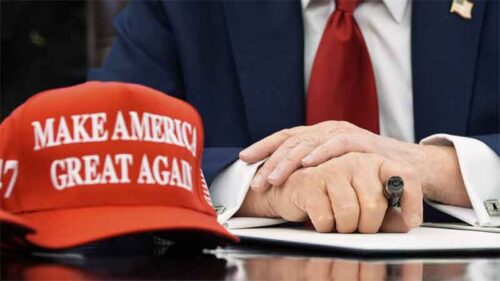
 Figure 1. Donald Trump’s MAGA movement has spread worldwide.
Throughout the last decade, it is undeniable that far-right policies have been on the rise. From the US and Brazil in the Americas to Poland in Europe and Japan in Asia, politicians have paralleled the behaviour of Trump, potentially adopting policies that overlap with MAGA. With the rise of such equivalent political movements globally, some crucial geopolitical questions are brought to light: Just how much have the policies and success of MAGA impacted other countries, and more broadly, the administrative environment of the world?
On the 5th of November 2024, Trump’s MAGA campaign was re-elected into office, with one underlying mentality – America first. From this, the new administration took on a populist, nationalist, and conservative ideology to tackle key policy areas such as a robust military, hardline immigration enforcement, cultural traditionalism, and heightened economic independence. Whilst the effectiveness and morality of such policies are highly debated, what cannot be disputed is the replication of MAGA-style political campaigns in democracies around the world.
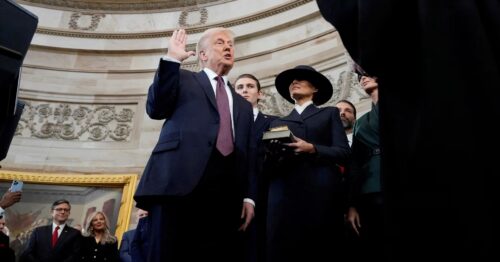 Figure 2 – Trump is sworn into the Capitol Rotunda after being re-elected in 2024
Dubbed by journalists as the “Trump of the Tropics,” Jair Bolsonaro of Brazil advertised many of Trump’s ‘America First’ style policies in his pursuit of office in 2019. Upon winning the presidency, Bolsonaro also adopted a far-right and populist rhetoric, which had profound impacts on Brazilian society. After failing to be re-elected in 2022, Bolsonaro claimed that the electronic voting systems were rigged, much like Trump’s alleged widespread voter fraud in 2020. Similar to the US, riots throughout Brazil followed this accusation.
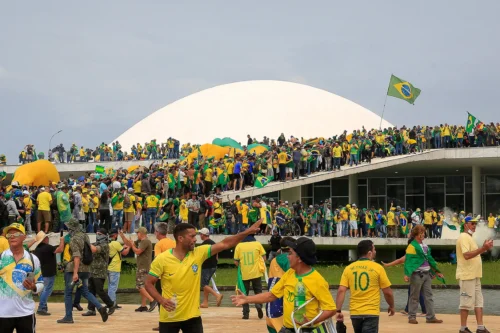 Figure 3 – Bolsonaro supporters riot after the 2022 election results
From this, MAGA can very much be argued to be influential in the political environment of Brazil, just as it can be for many other countries. In fact, one glance at the political environment of global democracies will reveal many Trump-like figures leading MAGA-style movements, including but not limited to the likes of Nigel Farage in Reform UK, Poland’s Donald Tusk, Japan’s Sanae Takaichi, and even Pauline Hanson’s One Nation here in Australia. Whilst these countries undoubtedly have their own justifications for housing far-right rhetorics, such as Poland’s Catholic conservatism and historical trauma or the UK’s desire for EU sovereignty, the success of MAGA could very well have increased the popularity of such parties and policy focuses throughout the world. This broadening global phenomenon, when adopted by countries with historically stable and distinct political traditions, has already shown a lasting impression on how leaders and governments will behave for the foreseeable future.
Taking Japan’s recently elected Prime Minister Sanae Takaichi as a case study, the effects of the MAGA model are already well-evident when compared to the stable, cautious government that she succeeded.
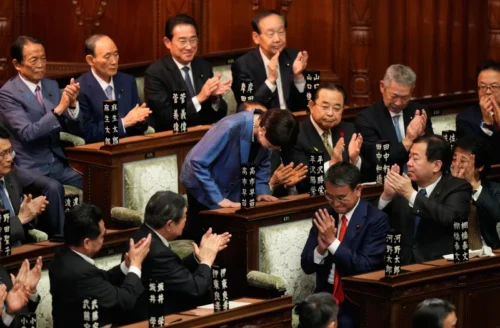 Figure 4 – Sanae Takaichi bows as Japan’s newly-elected prime minister
In October 2025, Takaichi rises as the new face of the Liberal Democratic Party (LDP), a Japanese political powerhouse that has dominantly governed the country for essentially the last 7 decades, with a strong focus on US diplomatic relationships, national defence, and traditional fiscal policy. However, the party has been in a somewhat compromised position since 2022. Following a series of scandals involving the party’s relationship with the polarising Unification Church, the LDP suffered an unprecedented loss of majority in Parliament in 2024 for the first time since 2009. Despite this, Takaichi saw no better time to capitalise on the growing popularity of the MAGA model, and worked to reposition and modernise the LDP, now characterised by a significant social media presence, a hardline immigration stance, and strong motivations to reintroduce traditional conservative ideology to the Japanese lifestyle. Upon taking office, her policies have had an immediate impact that parallels the rapid shift that the US experienced when Trump was re-elected. Notable changes included guidelines for double pricing at tourist attractions for foreign visitors, and a nearly 2,900% increase in foreign visa renewal fees.
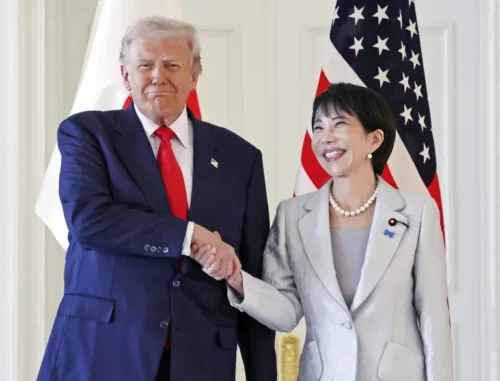 Figure 5 – Prime Minister Takaichi meets President Trump in October 2025
Regardless of whether or not these policies are directly inspired by the US, they reveal the real-time legitimisation of the MAGA model in non-US democratic systems. The fact that such an empirically prudent country as Japan can adopt this approach with such fast and tangible outcomes, when previous changes of this magnitude took multiple years rather than months, is striking. Significantly, it illustrates that the model of governance popularised by the Trump administration is rapidly becoming a defining feature of a 21st-century democracy, even in the most traditional political systems.
Liberal democracy has long been the structure of international order led by the US, yet the MAGA model seemingly undermines this, and adopting such a caricaturised and aggressive style of international representation may cost their legitimacy and hegemony. Increasingly, Trump and similar MAGA movements worldwide undermine theoretical fundamentals such as an independent judiciary, minority representation, and international free trade. If the US loses its role as the spearhead of the current international order, then its role as the global hegemon is challenged. In pursuit of ‘America first’, Trump withdrew from 66 international institutions, including the WHO, UN Human Rights Council, and UNESCO, being labelled as ‘wasteful, ineffective, or harmful’ organisations by his Secretary of State Marco Rubio. The legitimacy cost is not merely reputational. It risks the alliances and globalised institutions the US depends on.
In the face of this, what’s significant is how this pattern of rejecting established global institutions to prioritise nationalism is being reproduced in many other MAGA-style governments. Growing anti-EU sentiment from Hungary, Poland, and Turkey has created ‘exit’ movements pushed by their right-wing leaders. However, these performative strategies are ineffective with policy-driven governments. As of writing, approval for the US has dropped to 21% across NATO nations. Additionally, emulators are worsening their global standing. Unlike the US, these countries have little bargaining power relative to their large and polarising demands. For instance, Brazil’s Jair Bolsonaro has long attempted to circumvent environmental and humanitarian obligations by threatening economic relations.
Whilst Trump has been focused on gaining unilateral control, rather than acquiescing to the pressure, foreign states are turning to other partners. Notably, a key player driving this shift is Canada, with their prime minister Mark Carney stating how “the old order is not coming back”. Since March 2025, Canada has strengthened its relations with China, India, and Qatar, with 86% of Canadian firms viewing ties with China as their main priority.
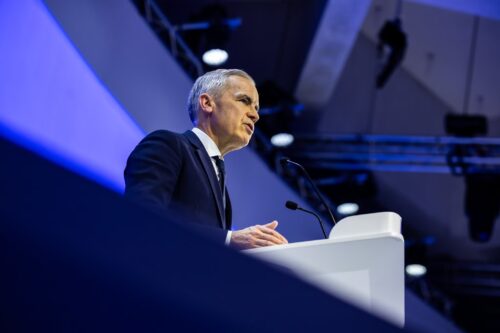 Figure 6 – Mark Carney speaking at the World Economic Forum
In the case of Australia specifically, their approach to interacting with the US and other MAGA-style governments has been one of caution. Since the commencement of the second Trump administration, Australia has engaged in a form of ‘strategic hedging’. Namely, this includes placing a strong emphasis on common ground, whilst navigating uncertainty through finding compromises. We can see this strategy come into play when observing the US-Australia rare-Earths deal signed by Albanese and Trump in October 2025, worth $8.5 billion. Meanwhile, on the other hand, the Australian government has exercised clear restraint regarding Trump’s calls for international assistance in its current conflict with Iran. Whilst refusing to commit boots on Iranian soil, Australian military equipment accompanied by 85 military personnel has instead been sent to the UAE to assist the defence of affected Gulf nations.
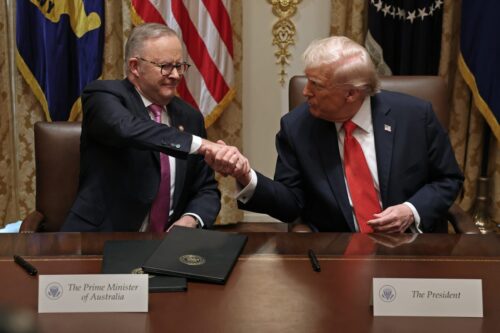 Figure 7 – Anthony Albanese meets Donald Trump at the White House
It is a common fact that history has a tendency to repeat itself. The same concepts of hardline nationalism and other conservative ideologies that have been present in several phases of society’s history manifest themselves today as a new wave of right-wing populism, finding new life and opportunity for growth through social media, increased global tensions and conflicts, and economic anxiety. Arising in the US with Trump’s MAGA movement, this political model has rapidly expanded globally, infiltrating many democracies around the world, including here in Australia. Japan, in particular, serves as an extremely important case study, given its previously cautious successive governments, demonstrating how quickly the rise of the movement creates significant shifts in a country’s policies. However, relative to their “non-MAGA” counterparts and how they handle the same volatile global ecosystem, it can be seen that these MAGA effects lack impact, potentially alluding to the delegitimisation of this form of modern democracy.
The CAINZ Digest is published by CAINZ, a student society affiliated with the Faculty of Business at the University of Melbourne. Opinions published are not necessarily those of the publishers, printers or editors. CAINZ and the University of Melbourne do not accept any responsibility for the accuracy of information contained in the publication.